
Blog
Methi Shampoo for Hair Growth: Benefits, Uses, How to Choose & Best Hair Care Tips

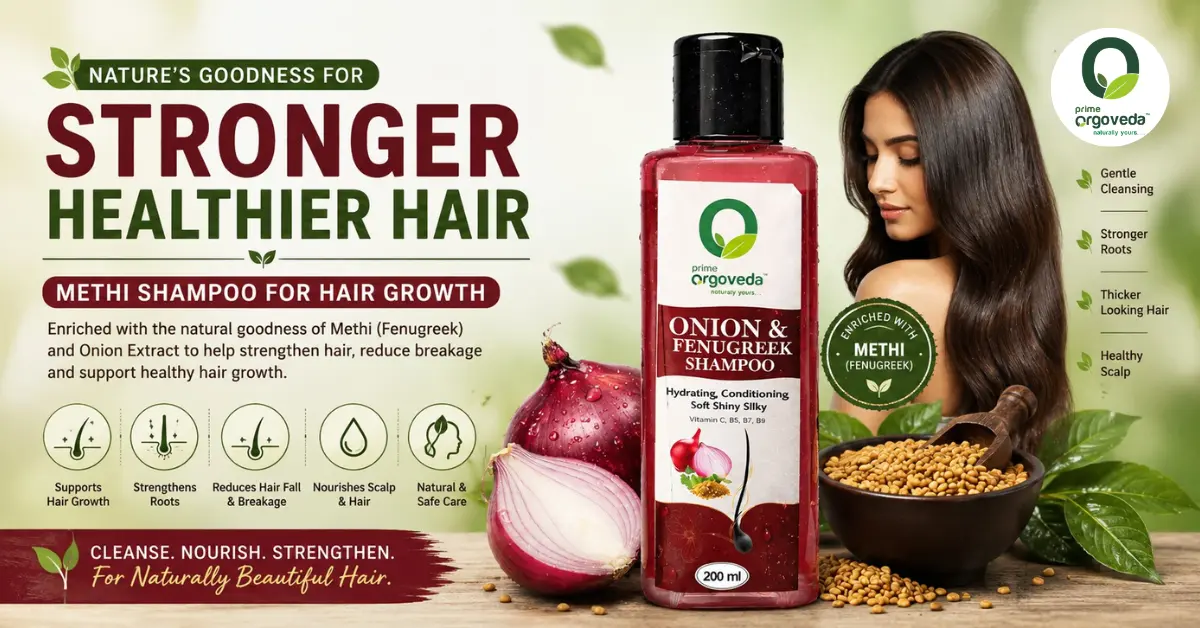
In recent years, people have become increasingly interested in natural and plant-based hair care products. As consumers look for gentler alternatives to conventional hair care, traditional ingredients such as methi (fenugreek) are gaining renewed attention. Methi has been used in traditional Indian hair-care practices for generations and is valued for its naturally occurring nutrients and conditioning properties.
Methi shampoo combines the traditional appeal of fenugreek with the convenience of a modern shampoo. It can help cleanse the scalp while supporting hair that looks softer, smoother, stronger, and healthier. Depending on the formulation, methi-based shampoos may also contain complementary botanical ingredients designed to support overall scalp and hair care.
One reason for its popularity is its versatility. Methi shampoo can be incorporated into a regular hair-care routine for people concerned about dryness, rough texture, scalp buildup, or the appearance of weak and dull hair. However, it is important to understand that shampoo primarily cleanses the scalp and hair; claims that it directly causes hair growth should be viewed carefully.
With the growing demand for herbal and ingredient-focused beauty products, methi shampoo offers an interesting option for those who want to combine traditional botanical hair care with everyday convenience.
In this guide, we’ll explore the benefits, uses, hair-growth considerations, selection tips, and best practices for using methi shampoo as part of your hair-care routine.
What Is Methi Shampoo?
Methi shampoo is a hair-cleansing product formulated with methi (fenugreek), a traditional Indian herb widely used in natural hair-care routines. Fenugreek is known for containing naturally occurring compounds such as proteins, fiber, vitamins, minerals, and plant-based antioxidants, which have contributed to its long-standing popularity in beauty and wellness practices.
Unlike traditional homemade methi hair treatments, which may involve soaking or grinding fenugreek seeds into a paste, methi shampoo offers a ready-to-use and convenient way to include fenugreek-inspired care in your regular hair-washing routine.
Depending on the formulation, methi shampoo may combine fenugreek extract with other botanical ingredients and cleansing agents. These ingredients work together to remove excess oil, dirt, sweat, and product buildup while helping the hair feel clean and refreshed.
How Does Methi Shampoo Work?
The primary purpose of any shampoo is to cleanse the scalp and hair. In a methi-based formulation, fenugreek extract can complement the cleansing process by providing botanical properties that may help support the overall condition and appearance of the hair.
With regular and appropriate use, a well-formulated methi shampoo may help hair feel:
- Clean and refreshed
- Softer and smoother
- More manageable
- Healthy-looking and naturally shiny
- Comfortable and refreshed at the scalp
Is Methi Shampoo the Same as Using Methi Seeds?
Not exactly. Homemade methi treatments use whole or powdered fenugreek seeds, while commercial methi shampoos typically use fenugreek extract or other processed forms of the ingredient in a balanced shampoo formulation.
This makes shampoo easier to use as part of a daily or weekly hair-care routine without the preparation time associated with traditional methi treatments.
Can Methi Shampoo Promote Hair Growth?
Methi shampoo is often marketed for hair growth because fenugreek has a long history of use in traditional hair care. However, shampoo should not be considered a guaranteed hair-growth treatment. Its main role is cleansing the scalp and supporting healthy-looking hair.
For the best results, methi shampoo can be combined with a balanced hair-care routine that includes proper conditioning, gentle handling, adequate nutrition, and regular scalp care.
What Is Methi (Fenugreek) and Why Is It Used in Hair Care?
Methi, commonly known as fenugreek, is an aromatic herb whose small golden-brown seeds have been used for centuries in Indian cooking, traditional wellness practices, and hair care. Scientifically known as Trigonella foenum-graecum, fenugreek is valued for its naturally occurring plant compounds and nutrients.
In traditional hair-care routines, methi seeds and extracts are commonly used in hair masks, oils, conditioners, and shampoos. Its popularity comes from its traditional association with maintaining a healthy scalp and improving the overall appearance and feel of the hair.
Why Is Methi Used in Hair Care?
Fenugreek contains naturally occurring proteins, mucilage, fiber, minerals, and other plant compounds. When incorporated into hair-care products, these properties can complement a cleansing and conditioning routine.
Some commonly recognized reasons for using methi in hair care include:
- Supports scalp care: Methi-based formulations can be incorporated into routines designed to keep the scalp clean and comfortable.
- Helps improve hair texture: The conditioning properties traditionally associated with fenugreek may help hair feel softer and smoother.
- Supports stronger-looking hair: Fenugreek’s nutrient-rich profile makes it a popular ingredient in traditional hair-care preparations.
- Helps improve shine and manageability: Regular hair care with suitable botanical ingredients may help hair look healthier and more manageable.
- Complements natural hair-care routines: Methi can be combined with other botanical ingredients to create gentle, plant-focused hair-care products.
Methi in Traditional Indian Hair Care
Methi has a long history in traditional Indian hair-care practices. A common home remedy involves soaking fenugreek seeds overnight, grinding them into a paste, and applying the mixture to the scalp and hair. Today, methi extract is also used in commercially formulated products such as shampoos and conditioners.
Does Methi Make Hair Grow Faster?
Methi is frequently associated with hair growth, but it is important to distinguish traditional use from scientifically established results. While fenugreek is a popular natural hair-care ingredient, using a methi shampoo does not guarantee faster hair growth.
A shampoo’s primary function is to cleanse the scalp and hair. Its effectiveness for hair care depends on the complete formulation, how it is used, and an individual’s hair and scalp needs.
Overall, methi remains a popular ingredient because it brings together traditional botanical hair care and modern shampoo convenience, making it an appealing choice for people interested in natural-inspired hair-care routines.
Top Benefits of Methi Shampoo for Hair
Methi, also known as fenugreek, has been a popular ingredient in traditional Indian hair-care practices for generations. Today, methi extract is used in shampoos and other hair-care products because of its natural, plant-based appeal.
A well-formulated methi shampoo can be a useful addition to a regular hair-care routine, particularly for people looking for botanical ingredients. While shampoo primarily works by cleansing the scalp and hair, the right formulation can also help improve the overall feel and appearance of your hair.
1. Helps Keep the Scalp Clean
One of the main purposes of shampoo is to remove dirt, excess oil, sweat, and product buildup from the scalp. Methi shampoo can provide a convenient way to include fenugreek-based care while maintaining scalp cleanliness.
A clean scalp creates a better foundation for a consistent hair-care routine.
2. Supports Healthy-Looking Hair
Methi contains naturally occurring plant compounds that have made it a popular traditional hair-care ingredient. When included in a suitable shampoo formulation, it can help hair feel clean, fresh, and well cared for.
3. May Help Improve Hair Texture
Dry, rough, or difficult-to-manage hair can benefit from a gentle cleansing routine. Depending on the complete formulation, methi shampoo may help leave hair feeling softer, smoother, and easier to manage.
4. Supports Scalp Care
A healthy-looking scalp is an important part of overall hair care. Methi-based products are traditionally used as part of scalp-care routines and can complement regular cleansing.
However, persistent itching, irritation, excessive flaking, or other scalp problems may require professional advice rather than relying solely on a shampoo.
5. Helps Hair Look Shinier
Hair that is properly cleansed and conditioned can appear more vibrant and naturally shiny. A well-formulated methi shampoo, especially when paired with a suitable conditioner, can contribute to a smoother and healthier-looking appearance.
6. Can Make Hair More Manageable
Regular cleansing helps remove buildup that can make hair feel heavy or difficult to style. Methi shampoo may be suitable for people looking for a botanical-inspired cleansing option that leaves hair feeling lighter and more manageable.
7. Complements a Natural Hair-Care Routine
For those interested in plant-based or traditional ingredients, methi shampoo offers a convenient alternative to preparing homemade fenugreek treatments. It can easily be incorporated into a weekly or regular hair-washing routine.
8. Suitable for Different Hair-Care Needs
Methi shampoos are available in different formulations. Some may combine fenugreek with ingredients such as aloe vera, hibiscus, amla, rosemary, or other botanical extracts. Choosing the right formulation according to your hair type can make the product more suitable for your individual routine.
Does Methi Shampoo Actually Promote Hair Growth?
Methi shampoo is often promoted as a hair-growth shampoo, but it is important to keep expectations realistic. There is not enough evidence to say that simply washing your hair with methi shampoo will directly increase hair growth.
Its more realistic role is to cleanse the scalp and support healthy-looking, manageable hair. If you are experiencing significant or persistent hair loss, identifying the underlying cause is more important than relying on a single shampoo.
Methi shampoo combines the traditional appeal of fenugreek with the convenience of modern hair care. Its potential benefits include supporting scalp cleanliness, improving the feel and manageability of hair, and complementing a natural-inspired hair-care routine.
For the best results, choose a gentle, well-formulated methi shampoo suited to your hair type and combine it with proper conditioning and overall hair-care practices.
Methi Shampoo for Hair Growth: What You Should Know
Methi, also known as fenugreek, has been used traditionally in Indian hair-care routines for generations. Because of its nutrient-rich seeds and plant compounds, methi is often included in shampoos, hair masks, oils, and conditioners designed to support healthy-looking hair.
However, when it comes to hair growth, it is important to understand what methi shampoo can realistically do. Shampoo is primarily a cleansing product, and there is limited scientific evidence that using methi shampoo alone can directly stimulate new hair growth.
How Methi Shampoo May Support Hair Care
A well-formulated methi shampoo can contribute to a healthy hair-care routine in several ways:
- Cleanses the scalp: Helps remove excess oil, dirt, sweat, and product buildup.
- Supports scalp hygiene: Regular cleansing can help maintain a clean and comfortable scalp.
- Improves hair feel: Botanical ingredients such as methi may help hair feel softer and smoother, depending on the formulation.
- Supports manageable hair: Clean, well-conditioned hair can be easier to comb and style.
- Complements natural hair care: Methi can be part of a broader routine focused on plant-based ingredients.
Can Methi Shampoo Reduce Hair Fall?
Hair fall can have many different causes, including genetics, stress, nutritional deficiencies, hormonal changes, illness, scalp conditions, and excessive chemical or heat treatment.
Methi shampoo may help maintain clean and healthy-looking hair, but it should not be considered a guaranteed treatment for hair loss. If you are experiencing sudden, severe, or persistent hair shedding, it is better to consult a qualified healthcare professional to identify the underlying cause.
Methi Shampoo and the Hair Growth Cycle
Hair naturally goes through different stages of growth, rest, and shedding. A shampoo cannot simply change this cycle overnight. Healthy-looking hair is more likely to result from consistent scalp care, gentle hair handling, adequate nutrition, and a suitable overall hair-care routine.
This is why methi shampoo should be viewed as one part of your routine rather than a standalone solution for hair growth.
How to Get the Most from Methi Shampoo
For a better hair-care experience:
- Wet your hair and scalp thoroughly.
- Apply an appropriate amount of methi shampoo.
- Gently massage the scalp with your fingertips.
- Avoid aggressive scratching or rubbing.
- Rinse thoroughly with clean water.
- Follow with a suitable conditioner if needed.
- Avoid excessive heat styling and harsh chemical treatments.
Who May Consider Methi Shampoo?
Methi shampoo may appeal to people who prefer herbal or botanical-inspired hair-care products and want a convenient way to include fenugreek in their routine. Choose a formulation according to your hair type—whether your hair is dry, oily, normal, or prone to roughness.
Methi shampoo can support scalp cleansing and healthy-looking, manageable hair, but it should not be treated as a guaranteed hair-growth treatment. Fenugreek’s traditional use makes it an interesting botanical ingredient, while the overall shampoo formulation determines how well it suits your hair and scalp.
For the best approach to hair growth concerns, combine appropriate hair care with a balanced lifestyle and seek professional advice when persistent or significant hair loss occurs.
How Does Methi Shampoo Work?
Methi shampoo works primarily by cleansing the scalp and hair while incorporating the traditional benefits of methi (fenugreek) into a convenient hair-care formulation. Fenugreek contains naturally occurring plant compounds that have made it a popular ingredient in traditional Indian hair care.
1. Cleanses the Scalp
Like other shampoos, methi shampoo contains cleansing ingredients that help remove dirt, excess oil, sweat, dead skin cells, and styling-product buildup from the scalp and hair.
Keeping the scalp clean is an important part of maintaining a healthy hair-care routine.
2. Provides Botanical Hair Care
Fenugreek extract can add a botanical element to the shampoo. Depending on the formulation and concentration, methi may help hair feel soft, smooth, and conditioned after washing.
3. Helps Improve Hair Feel and Manageability
A well-formulated shampoo can remove buildup without leaving the hair feeling excessively heavy. When combined with suitable conditioning ingredients, methi shampoo may help hair feel smoother and easier to comb and style.
4. Supports Scalp Care
Methi has traditionally been used in scalp and hair treatments. Including fenugreek extract in a shampoo allows users to incorporate this traditional ingredient into their regular cleansing routine.
However, methi shampoo should not be considered a treatment for medical scalp conditions. Persistent itching, irritation, severe dandruff, or inflammation may require professional evaluation.
5. Complements a Hair-Growth Routine
Methi shampoo is often marketed for hair growth, but its primary function remains cleansing. There is not enough evidence to conclude that shampooing with methi directly stimulates new hair growth.
Instead, it can support the basic scalp-care foundation needed for healthy-looking hair by keeping the scalp clean and helping hair remain manageable.
6. Works Best as Part of a Complete Routine
For better overall hair care, use methi shampoo alongside:
- A suitable conditioner
- Gentle scalp massage
- Limited heat styling
- Avoidance of excessive chemical treatments
- A balanced, nutritious diet
- Gentle brushing and drying practices
Methi shampoo works mainly by cleansing the scalp and hair while delivering fenugreek as a botanical ingredient. It can help support clean, soft, manageable, healthy-looking hair, but it should not be viewed as a guaranteed solution for hair loss or hair-growth problems.
The quality of the complete shampoo formulation, rather than methi alone, determines how well the product suits your hair and scalp.
How to Use Methi Shampoo Correctly
Using methi shampoo correctly can help you get the most from your regular hair-care routine while keeping your scalp and hair comfortable. Although methi shampoo is formulated with fenugreek as a botanical ingredient, it should be used much like a regular shampoo.
Step 1: Wet Your Hair Thoroughly
Start by rinsing your hair and scalp with lukewarm or comfortably cool water. Make sure the roots and scalp are completely wet before applying shampoo. This helps distribute the product more easily.
Step 2: Apply the Right Amount
Take a small, appropriate amount of methi shampoo into your palm. The amount you need depends on your hair length, thickness, and scalp condition. Using more shampoo than necessary does not necessarily provide better results.
Step 3: Gently Massage Your Scalp
Apply the shampoo mainly to your scalp and roots. Using your fingertips, gently massage the scalp in circular motions for around 1–2 minutes.
Avoid using your fingernails or rubbing aggressively, as this can irritate the scalp.
Step 4: Let the Shampoo Cleanse
Allow the shampoo to work for a short period according to the product’s instructions. There is generally no need to leave a regular shampoo on the scalp for an extended time.
Step 5: Rinse Thoroughly
Rinse your hair with clean water until the shampoo is completely removed. Pay particular attention to the scalp and areas around the hairline where product residue can remain.
Step 6: Follow with Conditioner
If your hair tends to feel dry, rough, or tangled, apply a suitable conditioner to the lengths and ends. Avoid applying excessive conditioner directly to the scalp unless the product specifically recommends it.
Step 7: Dry Your Hair Gently
After washing, avoid vigorously rubbing your hair with a towel. Instead, gently squeeze out excess water and pat or wrap your hair with a soft towel.
Allow your hair to dry naturally when possible, or use a hair dryer on a low or moderate heat setting.
How Often Should You Use Methi Shampoo?
The ideal frequency depends on your hair type, scalp condition, lifestyle, and the specific shampoo formulation.
- Oily scalp: You may need to wash more frequently.
- Normal scalp: Regular washing based on your routine may be sufficient.
- Dry or coarse hair: Less frequent washing may be more comfortable.
- After heavy sweating or exercise: Additional washing may sometimes be appropriate.
Always follow the usage instructions provided on your specific methi shampoo.
Common Mistakes to Avoid
To maintain healthy-looking hair, avoid:
- Using excessive amounts of shampoo
- Scratching the scalp with your nails
- Washing with very hot water
- Leaving shampoo on longer than recommended
- Shampooing the hair aggressively
- Skipping conditioner when your hair needs additional moisture
- Expecting shampoo alone to solve persistent hair-loss problems
For the best experience, use methi shampoo consistently and gently, focusing on cleansing the scalp rather than repeatedly scrubbing the hair lengths. Pairing it with appropriate conditioning and gentle hair-care habits can help maintain clean, soft, manageable, and healthy-looking hair.
How Often Should You Use Methi Shampoo?
The ideal frequency for using methi shampoo depends on your hair type, scalp condition, lifestyle, and the specific shampoo formulation. There is no single schedule that works for everyone. The goal is to keep the scalp clean without unnecessarily drying or irritating the hair and scalp.
Recommended Frequency Based on Hair Type
- Oily Scalp – 3 to 4 Times a Week
If your scalp becomes oily quickly or you exercise frequently, you may need to shampoo more often. Methi shampoo can help remove excess oil, sweat, and buildup while keeping the scalp feeling fresh.
- Normal Hair – 2 to 3 Times a Week
For a relatively balanced scalp, washing two or three times a week may be sufficient. Adjust the frequency depending on how quickly your hair becomes oily or dirty.
- Dry Hair – 1 to 2 Times a Week
If you have a dry scalp or naturally dry hair, frequent washing may make your hair feel even drier. Using methi shampoo once or twice a week, along with a suitable conditioner, may be more comfortable.
- Combination or Mixed Hair – 2 to 3 Times a Week
If your scalp tends to be oily while your hair lengths are dry, focus shampoo mainly on the scalp and use conditioner on the lengths and ends.
Should You Use Methi Shampoo Every Day?
Daily use is not necessarily required. Whether you can use a particular methi shampoo daily depends on its formulation and your individual scalp and hair needs.
If your hair feels excessively dry, rough, itchy, or irritated after frequent washing, consider reducing the frequency and choosing a gentler formulation.
Factors That Can Affect Shampoo Frequency
Your ideal washing schedule may change based on:
- Scalp oiliness
- Hair texture and thickness
- Exercise and sweating
- Weather and humidity
- Use of styling products
- Exposure to dust and pollution
- Hair treatments such as colouring or chemical straightening
For example, people living in hot or humid environments may need to wash more frequently because of increased sweating.
How to Know If You’re Washing Too Often
You may be washing too frequently if your hair consistently feels:
- Very dry or rough
- Brittle or difficult to manage
- Excessively tangled
- Tight or uncomfortable at the scalp
On the other hand, if your scalp feels excessively greasy, has significant buildup, or your hair looks unclean soon after washing, you may need to wash more frequently.
How to Get Better Results
Rather than focusing only on the number of washes per week, concentrate on how your hair and scalp respond. Use an appropriate amount of shampoo, massage gently with your fingertips, rinse thoroughly, and use conditioner when needed.
Also, follow the instructions provided on your specific methi shampoo because formulations can differ.
For many people, 2–3 washes per week can be a practical starting point, but your ideal routine may be more or less frequent. Methi shampoo should be viewed as part of a complete hair-care routine—not as a product that needs to be used excessively to achieve better hair growth.
Consistency, gentle cleansing, proper conditioning, and choosing a formulation suited to your hair type are more important than simply increasing the number of washes.
Best Hair Care Routine to Use with Methi Shampoo
Using methi shampoo as part of a consistent hair-care routine can help keep your scalp clean and your hair feeling soft, manageable, and healthy-looking. However, shampoo works best when combined with other simple hair-care practices rather than being treated as a standalone solution for hair growth.
1. Start with a Healthy Scalp
A clean scalp is the foundation of good hair care. Before washing, gently brush or comb your hair to remove tangles. Avoid scratching the scalp or using excessive force.
If you regularly use styling products, make sure you cleanse your scalp thoroughly to prevent product buildup.
2. Use Methi Shampoo Correctly
Wet your hair thoroughly with lukewarm water. Apply an appropriate amount of methi shampoo to your scalp and gently massage using your fingertips.
Focus primarily on the scalp and roots, rather than aggressively scrubbing the hair lengths. Rinse thoroughly with clean water.
3. Follow with a Suitable Conditioner
After shampooing, apply conditioner mainly to the mid-lengths and ends of your hair.
Conditioner can help improve softness, reduce tangling, and make the hair easier to manage. Leave it on according to the product instructions and rinse thoroughly.
4. Consider a Weekly Hair Treatment
Depending on your hair type, you can include a nourishing hair treatment once a week. Look for products containing suitable botanical or conditioning ingredients.
If you prefer traditional methi treatments, avoid combining too many different treatments at once, as this can make it difficult to determine what works for your hair.
5. Massage the Scalp Gently
A gentle scalp massage can be a relaxing addition to your routine. Use your fingertips rather than your fingernails and avoid vigorous rubbing.
A massage can help you care for the scalp without putting unnecessary mechanical stress on the hair.
6. Support Hair Health Through Nutrition
Hair care is not only about external products. A balanced diet containing adequate protein, iron, zinc, vitamins, healthy fats, and other essential nutrients supports normal hair growth and overall health.
If you suspect a nutritional deficiency, consult a healthcare professional rather than taking supplements without guidance.
7. Limit Excessive Heat Styling
Frequent use of straighteners, curling irons, and high-heat blow-drying can contribute to dryness and breakage.
When using heat-styling tools:
- Use a moderate temperature.
- Avoid repeated passes over the same section.
- Consider a suitable heat-protection product.
- Give your hair regular breaks from heat styling.
8. Handle Wet Hair Gently
Wet hair can be more prone to stretching and breakage. After washing, gently squeeze out excess water rather than aggressively rubbing your hair with a towel.
Use a wide-tooth comb if you need to detangle wet hair, and work gently from the ends toward the roots.
9. Maintain a Consistent Washing Schedule
Your ideal shampoo frequency depends on your scalp type, hair texture, lifestyle, and environment. For many people, washing around 2–3 times a week may be a reasonable starting point, but oily scalps may need more frequent cleansing while dry hair may require less.
Adjust your routine based on how your scalp and hair respond.
10. Protect Your Hair Between Washes
Simple habits can help reduce unnecessary damage:
- Avoid very tight hairstyles.
- Use gentle hair accessories.
- Don’t repeatedly brush or comb unnecessarily.
- Protect your hair from prolonged sun exposure when appropriate.
- Keep your scalp and hair clean after heavy sweating.
Can This Routine Promote Hair Growth?
A good hair-care routine can help reduce avoidable breakage and maintain a healthy-looking scalp and hair, but methi shampoo itself should not be considered a guaranteed hair-growth treatment.
Hair growth and hair loss are influenced by many factors, including genetics, hormones, nutrition, stress, medications, and underlying health conditions.
Simple Methi Shampoo Routine
Wash → Methi Shampoo → Rinse → Conditioner → Gentle Drying → Regular Scalp & Hair Care
By combining methi shampoo with gentle cleansing, appropriate conditioning, good nutrition, and careful hair handling, you can create a practical routine for maintaining clean, smooth, manageable, and healthy-looking hair.
Methi Shampoo for Different Hair Types
Methi, also known as fenugreek, is a popular botanical ingredient in traditional hair care. A methi shampoo can be incorporated into different hair-care routines, but the best choice depends on your scalp condition, hair texture, oiliness, dryness, and overall hair needs.
There is no single shampoo that works equally well for everyone. Understanding your hair type can help you choose a methi shampoo that provides effective cleansing without leaving your hair excessively dry or heavy.
1. Methi Shampoo for Dry Hair
Dry hair can feel rough, brittle, tangled, or dull. If you have dry hair, look for a gentle methi shampoo that includes moisturizing or conditioning ingredients.
Look for:
- Fenugreek (methi) extract
- Aloe vera
- Natural moisturizing ingredients
- Mild cleansing agents
- Conditioning ingredients
Hair-care tip: Avoid washing excessively and follow shampooing with a nourishing conditioner, particularly on the mid-lengths and ends.
2. Methi Shampoo for Oily Hair
An oily scalp can produce excess sebum, making the roots appear greasy shortly after washing. A methi shampoo with an effective but gentle cleansing formula can help remove excess oil, sweat, and buildup.
Look for:
- Lightweight formulations
- Gentle cleansing ingredients
- Botanical extracts
- Formulations designed for oily or combination scalps
Hair-care tip: Concentrate shampoo on the scalp rather than repeatedly washing the dry lengths of your hair.
3. Methi Shampoo for Normal Hair
If your scalp produces a balanced amount of oil and your hair is neither excessively dry nor oily, you have more flexibility when choosing a methi shampoo.
A balanced formulation can help maintain clean, soft, and manageable hair as part of your regular routine.
Hair-care tip: Wash according to your scalp’s needs rather than following a fixed schedule.
4. Methi Shampoo for Combination Hair
Combination hair typically has an oilier scalp with drier hair lengths and ends. This can make choosing a shampoo slightly more challenging.
A gentle methi shampoo can be applied primarily to the scalp while conditioner is used on the lengths and ends.
Try this approach:
Methi Shampoo → Scalp Cleansing → Thorough Rinse → Conditioner on Lengths & Ends
This helps address scalp oiliness without unnecessarily drying the rest of the hair.
5. Methi Shampoo for Curly or Wavy Hair
Curly and wavy hair can be more prone to dryness and frizz. If you have textured hair, consider a methi shampoo with a gentle, moisturizing formulation.
Look for:
- Mild cleansing agents
- Moisturizing ingredients
- Conditioning botanicals
- Formulas designed to minimize excessive dryness
Hair-care tip: Avoid aggressive scrubbing and use conditioner regularly to help maintain softness and manageability.
6. Methi Shampoo for Damaged or Chemically Treated Hair
Hair that has been coloured, bleached, straightened, or chemically treated may require extra care. Choose a methi shampoo that focuses on gentle cleansing and conditioning rather than harsh cleansing.
Follow shampooing with a suitable conditioner or hair treatment to improve the feel and manageability of treated hair.
7. Methi Shampoo for Fine or Thin Hair
Fine hair can become weighed down by heavy products. If your hair is fine, choose a lightweight methi shampoo that cleanses effectively without leaving excessive residue.
Use conditioner sparingly and primarily on the ends if your roots become oily quickly.
How to Choose Methi Shampoo for Your Hair Type
Before purchasing, consider:
- Your scalp: Oily, dry, normal, or combination?
- Your hair texture: Straight, wavy, curly, or coily?
- Hair condition: Healthy, dry, damaged, or chemically treated?
- Product formulation: Are the cleansing and conditioning ingredients suitable for your needs?
- Your washing frequency: Does your lifestyle require frequent cleansing?
Important Tip
Methi is a botanical ingredient, but the overall shampoo formulation matters more than the presence of methi alone. Check the complete ingredient list and choose a product that suits your specific hair and scalp needs.
If a shampoo causes persistent itching, redness, burning, or irritation, discontinue use and consider seeking professional advice.
Methi shampoo can be a useful addition to different hair-care routines when the formulation matches your individual needs. Whether you have dry, oily, normal, combination, curly, fine, or chemically treated hair, choosing the right formula and using it correctly can help maintain clean, soft, manageable, and healthy-looking hair.
How to Choose the Best Methi Shampoo
Choosing the best methi shampoo is not simply about selecting a product with “methi” or “fenugreek” on the label. The overall formulation, your hair type, scalp condition, and specific hair-care needs all play an important role.
A good methi shampoo should provide effective cleansing while being appropriate for your scalp and hair. Here are some important factors to consider before making your choice.
1. Check the Ingredients
Start by checking the complete ingredient list. Look for methi or fenugreek extract and understand what other ingredients are included in the formulation.
Depending on your hair needs, you may also prefer complementary ingredients such as:
- Aloe vera
- Amla
- Hibiscus
- Rosemary
- Coconut-derived conditioning ingredients
- Other botanical extracts
Remember that the overall formulation matters more than the presence of a single ingredient.
2. Choose According to Your Hair Type
Your hair type should influence your shampoo selection.
Dry hair: Look for moisturizing and conditioning ingredients.
Oily scalp: Choose a formulation that provides effective but gentle cleansing.
Normal hair: A balanced formulation may be sufficient for regular use.
Curly or wavy hair: Look for gentle formulas that don’t leave the hair feeling excessively dry.
Fine hair: Lightweight formulations may help prevent the hair from feeling weighed down.
3. Consider Your Scalp Condition
Your scalp is just as important as your hair lengths. If you have an oily scalp, you may need stronger cleansing than someone with a dry scalp.
If you experience persistent itching, redness, irritation, severe flaking, or scalp discomfort, don’t rely solely on a cosmetic shampoo. Consider consulting a qualified healthcare professional.
4. Look for a Gentle Formulation
A shampoo should cleanse effectively without making your scalp or hair feel excessively dry or irritated.
If your hair is dry, damaged, coloured, or chemically treated, a milder cleansing formulation may be more appropriate.
5. Avoid Choosing Based Only on Hair-Growth Claims
Methi shampoo is frequently promoted as a solution for hair growth and hair fall. However, shampoo primarily cleanses the scalp and hair, and there is limited evidence that methi shampoo alone can directly stimulate significant new hair growth.
Instead of choosing a product solely because it promises rapid hair growth, look for a formulation that supports good scalp hygiene and healthy-looking, manageable hair.
6. Check Product Quality and Transparency
When purchasing a methi shampoo, consider whether the manufacturer clearly provides:
- Complete ingredient information
- Directions for use
- Suitable storage instructions
- Manufacturing and expiry information
- Customer support details
- Appropriate product certifications or compliance information where applicable
Transparent labeling can help you make a more informed choice.
7. Consider Your Washing Routine
Think about how frequently you need to wash your hair. If you have an oily scalp or exercise frequently, you may need a shampoo suitable for more frequent cleansing.
For dry or textured hair, a gentler formula that works well with less frequent washing may be preferable.
8. Check Whether It Suits Your Scalp
Even a well-formulated shampoo may not suit everyone. When trying a new methi shampoo, pay attention to how your scalp and hair respond.
If you notice persistent burning, itching, redness, or irritation, stop using the product and seek professional advice if symptoms continue.
9. Consider the Overall Value
Price alone doesn’t determine whether a shampoo is good. Compare the quantity, formulation, ingredient quality, usage instructions, and suitability for your hair type before making a decision.
A product that suits your scalp and lasts through regular use may offer better value than a cheaper product that leaves your hair excessively dry or uncomfortable.
Quick Checklist Before Buying
Before purchasing a methi shampoo, ask yourself:
- Does it contain methi/fenugreek as advertised?
- Is the formulation suitable for my hair type?
- Is it appropriate for my scalp condition?
- Does it provide gentle but effective cleansing?
- Are the ingredients clearly listed?
- Are the product directions and expiry details available?
- Am I choosing it for realistic hair-care benefits rather than exaggerated growth claims?
The best methi shampoo is ultimately the one that matches your individual hair and scalp needs. Look beyond the “methi” label and evaluate the complete formulation, ingredients, product quality, and suitability for your hair type.
With the right product and a consistent routine, methi shampoo can be a convenient way to incorporate the traditional appeal of fenugreek into everyday hair care.
Methi Shampoo vs. Regular Shampoo
Choosing between methi shampoo and regular shampoo often comes down to your hair type, scalp needs, ingredients, and personal preference. Both products are primarily designed to cleanse the scalp and hair, but methi shampoo includes methi (fenugreek) as a featured botanical ingredient.
Understanding the differences can help you decide which option fits better into your hair-care routine.
What Is Methi Shampoo?
Methi shampoo is a shampoo formulated with fenugreek extract or other fenugreek-derived ingredients. Methi has a long history of use in traditional Indian hair-care practices and is commonly included in botanical hair-care products.
Depending on the formulation, methi shampoo may combine fenugreek with ingredients such as aloe vera, amla, hibiscus, rosemary, or conditioning agents.
What Is Regular Shampoo?
Regular shampoo refers to conventional shampoo formulations designed primarily for cleansing the scalp and hair. These products may be formulated for specific needs such as oily scalp, dry hair, dandruff, colour-treated hair, volume, or damage care.
Regular shampoo does not necessarily mean a product without natural ingredients—it simply refers to a general shampoo formulation rather than one specifically centered around methi.
Key Differences
| Featured ingredient | Methi/fenugreek | Varies by formulation |
| Primary purpose | Cleansing + botanical hair care | Primarily cleansing + targeted hair care |
| Traditional use | Strong association with traditional Indian hair care | Depends on ingredients |
| Suitable for | People interested in fenugreek-based hair care | Wide range of hair and scalp needs |
| Hair-growth claims | Often marketed for hair growth | May also have growth-related claims |
| Formulation options | Can include other botanical ingredients | Available in a very wide range of formulas |
Benefits of Methi Shampoo
Methi shampoo may appeal to people who prefer plant-based or traditional ingredients. Depending on the complete formulation, it can help:
- Cleanse the scalp and remove buildup
- Support a healthy-looking scalp
- Make hair feel softer and smoother
- Improve hair manageability
- Add botanical ingredients to a regular hair-care routine
However, methi shampoo should not be considered a guaranteed treatment for hair loss or hair growth.
Benefits of Regular Shampoo
Regular shampoos offer a much wider range of specialized formulations. Depending on your needs, you can find products designed for:
- Oily scalp
- Dry hair
- Sensitive scalp
- Curly or textured hair
- Colour-treated hair
- Damaged hair
- Dandruff-prone scalp
- Fine or volumeless hair
This variety can make regular shampoo a better option when you have a specific hair or scalp requirement.
Which One Is Better for Hair Growth?
Neither type should automatically be considered a hair-growth treatment.
Hair growth is influenced by factors such as genetics, hormones, nutrition, stress, age, medications, and overall health. Shampoo mainly helps maintain scalp cleanliness and hair condition.
If you’re experiencing persistent or significant hair loss, identifying the underlying cause is more important than choosing between methi and regular shampoo.
Which One Should You Choose?
Choose methi shampoo if you:
- Prefer fenugreek-based or botanical hair care
- Want to incorporate traditional ingredients into your routine
- Like a shampoo designed around natural-inspired ingredients
- Have a formulation that suits your particular hair type
Choose a regular shampoo if you:
- Have a specific scalp or hair concern
- Need a specialized formulation
- Prefer a particular cleansing or conditioning system
- Find that another shampoo works better for your hair
Methi shampoo isn’t automatically better than regular shampoo. The best choice depends on the complete formulation and how well it suits your scalp and hair.
If you enjoy botanical hair care and your scalp responds well to fenugreek-based products, methi shampoo can be a useful addition to your routine. Ultimately, a gentle, well-formulated shampoo that suits your individual needs is more important than whether it is labeled “methi” or “regular.”
Common Mistakes to Avoid When Using Methi Shampoo
Methi shampoo can be a convenient way to include fenugreek-based hair care in your regular routine. However, using too much product, washing incorrectly, or expecting instant hair-growth results can reduce the benefits of a good hair-care routine.
Here are some common mistakes to avoid when using methi shampoo.
1. Using Too Much Shampoo
More shampoo does not necessarily mean cleaner or healthier hair. Using excessive amounts can make rinsing difficult and may leave your scalp or hair feeling dry.
Better approach: Use an appropriate amount based on your hair length, thickness, and the product’s instructions.
2. Scrubbing the Scalp Too Aggressively
Some people vigorously rub their scalp when shampooing. Excessive friction can cause unnecessary irritation and may contribute to hair breakage, especially when hair is wet.
Better approach: Gently massage your scalp with your fingertips. Avoid using your fingernails.
3. Applying Shampoo Mainly to the Hair Ends
The scalp and roots are where most oil, sweat, and buildup accumulate. Applying large amounts of shampoo directly to the ends can unnecessarily dry them.
Better approach: Concentrate shampoo on the scalp and roots, allowing the lather to rinse through the lengths.
4. Washing With Very Hot Water
Very hot water can leave some people’s scalp and hair feeling dry and uncomfortable.
Better approach: Use lukewarm or comfortably cool water when washing your hair.
5. Not Rinsing Thoroughly
Leaving shampoo residue on the scalp can make the hair feel heavy or uncomfortable.
Better approach: Rinse thoroughly until all visible shampoo has been removed, paying attention to the scalp, hairline, and areas behind the ears.
6. Using Methi Shampoo Too Frequently
Using shampoo more often than your scalp requires may contribute to dryness or irritation, particularly if you have naturally dry or chemically treated hair.
Better approach: Adjust your washing schedule according to your hair type, scalp condition, lifestyle, and the shampoo’s instructions.
7. Skipping Conditioner
Shampoo cleanses the hair, while conditioner can help improve softness and manageability.
If your hair tends to become dry or tangled, skipping conditioner may leave it feeling rough.
Better approach: Apply conditioner mainly to the mid-lengths and ends after shampooing.
8. Expecting Instant Hair Growth
One of the biggest misconceptions is expecting methi shampoo to produce rapid hair growth.
Although fenugreek is traditionally associated with hair care, shampoo primarily cleanses the scalp and hair. There is limited evidence that methi shampoo alone can directly stimulate significant new hair growth.
Better approach: Think of methi shampoo as one part of a broader hair-care routine.
9. Ignoring Your Hair Type
A shampoo that works well for someone with an oily scalp may not be ideal for someone with very dry or curly hair.
Better approach: Choose a methi shampoo formulated for your specific hair type and scalp needs.
10. Overusing Other Hair Treatments
Combining shampoo with multiple oils, masks, serums, and chemical treatments at the same time can make it difficult to determine what is actually helping your hair.
Better approach: Keep your routine simple and introduce new products gradually.
11. Ignoring Signs of Irritation
Natural or botanical ingredients are not automatically suitable for everyone. If you experience persistent itching, redness, burning, swelling, or irritation, discontinue the product.
If symptoms continue, seek advice from a qualified healthcare professional.
12. Rubbing Wet Hair With a Towel
Hair is more vulnerable to mechanical damage when wet. Aggressively rubbing it with a towel can increase tangling and breakage.
Better approach: Gently squeeze out excess water and pat or wrap your hair with a soft towel.
Quick Checklist
When using methi shampoo:
- Use an appropriate amount
- Massage gently
- Focus on the scalp
- Rinse thoroughly
- Use conditioner when needed
- Avoid excessively hot water
- Choose a frequency suitable for your hair
- Don’t expect instant hair-growth results
- Stop using the product if it causes persistent irritation
Using methi shampoo correctly is more important than using it excessively. Gentle cleansing, appropriate conditioning, and choosing a formulation suited to your hair type can help you maintain clean, manageable, and healthy-looking hair.
Most importantly, remember that methi shampoo is a hair-care product, not a guaranteed hair-loss or hair-growth treatment. A consistent and balanced routine is the key to better long-term hair care.
Tips to Get Better Results from Your Methi Hair Care Routine
Methi, or fenugreek, has been traditionally used in Indian hair care and is now found in shampoos, oils, masks, and conditioners. To get the most from a methi hair-care routine, consistency and proper hair-care habits are more important than using large amounts of any single product.
Here are practical tips to help you build an effective methi-based routine.
1. Choose a Methi Shampoo Suited to Your Hair Type
Start by selecting a formulation that matches your scalp and hair needs.
- Oily scalp: Choose a gentle cleansing formula.
- Dry hair: Look for moisturizing and conditioning ingredients.
- Normal hair: A balanced formulation may work well.
- Curly or wavy hair: Consider a gentle formula that helps prevent excessive dryness.
- Fine hair: A lightweight formulation may be preferable.
The presence of methi alone does not determine whether a shampoo is suitable for you.
2. Follow the Correct Shampooing Technique
Wet your hair thoroughly before applying shampoo. Use an appropriate amount and gently massage your scalp with your fingertips.
Focus on the scalp and roots, rather than aggressively scrubbing the hair lengths. Rinse thoroughly with clean water.
3. Don’t Shampoo More Than Necessary
Using methi shampoo excessively won’t necessarily produce better results. Your ideal washing frequency depends on your scalp, hair type, lifestyle, weather, and the specific formulation.
Let your scalp condition guide your routine rather than following a rigid schedule.
4. Use Conditioner After Shampooing
Conditioner can help improve softness and manageability, especially if your hair tends to be dry or tangled.
Apply it mainly to the mid-lengths and ends, leave it according to the product instructions, and rinse thoroughly.
5. Consider a Weekly Methi Hair Treatment
If your hair responds well to botanical treatments, you may occasionally include a methi-based hair mask or conditioning treatment.
Avoid using multiple intensive treatments at the same time. A simple routine makes it easier to understand how your hair responds.
6. Massage Your Scalp Gently
A gentle scalp massage can be a relaxing addition to your hair-care routine. Use your fingertips and avoid scratching with your nails.
The goal is gentle care—not vigorous rubbing.
7. Keep Your Hair Hydrated
Shampoo cleanses the hair, but maintaining softness may require additional conditioning. If your hair feels dry, consider using a suitable conditioner or occasional deep-conditioning treatment.
Avoid excessive use of products that leave heavy buildup.
8. Reduce Heat and Chemical Damage
Frequent use of straighteners, curling irons, high-heat dryers, bleaching, and chemical treatments can contribute to dryness and breakage.
Whenever possible:
- Use lower heat settings.
- Apply an appropriate heat-protection product.
- Avoid repeated heat exposure.
- Give chemically treated hair additional conditioning care.
9. Handle Wet Hair Carefully
Wet hair is more susceptible to mechanical damage. After shampooing, avoid vigorous towel rubbing.
Instead, gently squeeze out excess water and use a soft towel. Detangle carefully with a suitable wide-tooth comb if necessary.
10. Maintain a Balanced Diet
Healthy-looking hair also depends on overall nutrition. Include a balanced diet with adequate protein, iron, zinc, vitamins, minerals, and healthy fats.
If you suspect a nutritional deficiency or experience significant hair loss, consult a healthcare professional rather than taking supplements without guidance.
11. Be Consistent and Patient
Hair care is a long-term process. Don’t change products every few days because you don’t see immediate results.
Give your routine reasonable time and pay attention to changes in hair texture, scalp comfort, manageability, and overall appearance.
12. Don’t Expect Methi Shampoo to Guarantee Hair Growth
Methi is traditionally associated with hair care, but a shampoo should not be considered a guaranteed treatment for hair growth or hair loss.
Its primary function is to cleanse the scalp and hair. If you experience sudden or persistent hair loss, identifying the underlying cause is more important than relying on a cosmetic shampoo.
Simple Methi Hair-Care Routine
Step 1: Wet your hair
Step 2: Apply methi shampoo
Step 3: Gently massage the scalp
Step 4: Rinse thoroughly
Step 5: Apply conditioner
Step 6: Dry gently
Step 7: Maintain regular scalp and hair care
A good methi hair-care routine doesn’t need to be complicated. Choose a suitable formulation, shampoo gently, condition regularly, minimize unnecessary damage, and maintain healthy lifestyle habits.
By focusing on consistency rather than excessive product use, you can make methi shampoo a practical part of a routine designed to maintain clean, soft, manageable, and healthy-looking hair.
Conclusion
Methi, also known as fenugreek, has been a valued ingredient in traditional Indian hair care for generations. Today, methi shampoo provides a convenient way to incorporate this botanical ingredient into a modern hair-care routine while enjoying the everyday cleansing benefits of shampoo.
A well-formulated methi shampoo can help cleanse the scalp, remove excess oil and buildup, and leave hair feeling clean, soft, fresh, and manageable. When combined with suitable conditioning and gentle hair-care practices, it can become a useful part of a consistent routine.
However, it’s important to maintain realistic expectations. While methi is traditionally associated with hair strength and growth, methi shampoo should not be considered a guaranteed treatment for hair loss or a direct hair-growth solution. Shampoo’s primary role is to cleanse the scalp and hair, while healthy hair is influenced by many factors, including genetics, nutrition, lifestyle, scalp health, and overall well-being.
Make Methi Shampoo Part of a Complete Routine
For better results, combine methi shampoo with:
- A suitable conditioner
- Gentle scalp and hair care
- Careful handling of wet hair
- Limited heat and chemical treatments
- A balanced, nutritious diet
- Adequate hydration
- A consistent washing routine
Most importantly, choose a methi shampoo that suits your hair type and scalp needs. What works well for oily hair may not be ideal for dry, curly, or chemically treated hair.
If you experience persistent scalp irritation, excessive dandruff, or significant hair loss, consider consulting a qualified healthcare professional to identify the underlying cause.
A Simple Step Toward Better Hair Care
You don’t need a complicated routine to care for your hair. By choosing suitable products, cleansing gently, conditioning when needed, and maintaining healthy hair-care habits, you can create a routine that works for you.
Methi shampoo can be a simple, botanical-inspired addition to your everyday hair-care routine—helping you maintain clean, soft, manageable, and healthy-looking hair while bringing the traditional appeal of fenugreek into modern hair care.


 Agarbatti
 Computer Loban
 Dhoop Sticks
 Dhoop Cones
 Loban Powder
 Dhoop Cups
 Soap
Soap Facewash
 Shampoo