
Blog
Best Shampoo for Hair Growth: A Complete Guide to Healthier, Stronger Hair

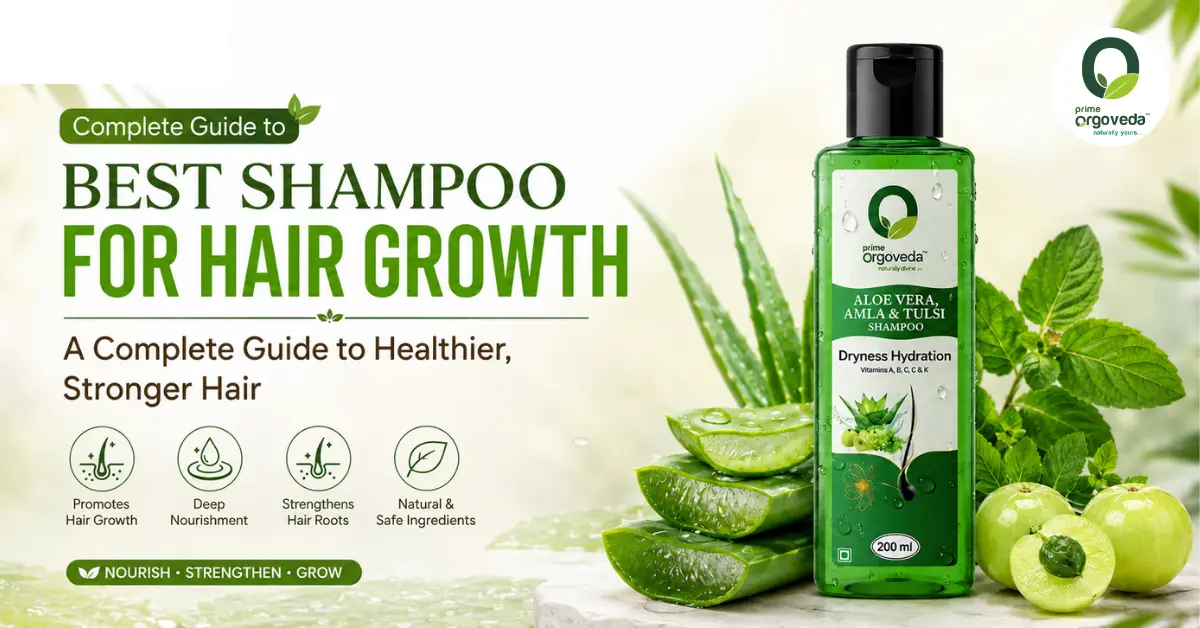
Healthy, strong, and well-nourished hair begins with a healthy scalp and a consistent haircare routine. While hair growth is influenced by genetics, age, hormones, nutrition, lifestyle, and overall health, choosing the right shampoo can play an important role in maintaining a clean, balanced scalp and reducing hair damage and breakage.
With countless shampoos available today, finding the best shampoo for hair growth can be confusing. Products may contain herbal extracts, botanical oils, vitamins, proteins, or other specialized ingredients, each designed to address different hair and scalp needs.
This comprehensive guide explains what hair growth shampoos are, what ingredients to look for, how to use shampoo correctly, how to choose one for your hair type, and which everyday habits can support healthier-looking, stronger hair.
Understanding Hair Growth and Hair Health
Hair growth is a natural biological process that occurs through repeated cycles. Each individual hair follicle goes through different stages, including active growth, transition, resting, and shedding.
Although everyone naturally loses some hair every day, excessive shedding, frequent breakage, dryness, or a weakened scalp can make hair appear thinner or less healthy.
Several factors can influence the condition and appearance of hair, including:
- Genetics and age
- Hormonal changes
- Nutritional deficiencies
- Stress and lifestyle
- Scalp condition
- Haircare practices
- Excessive heat styling
- Chemical treatments
- Environmental exposure
- Improper cleansing and conditioning
A suitable shampoo cannot change genetic factors or treat every cause of hair loss. However, the right shampoo can help maintain a clean scalp, remove excess oil and buildup, minimize unnecessary dryness, and support a healthy haircare routine.
What Is Hair Growth Shampoo?
A hair growth shampoo is generally formulated to cleanse the scalp and hair while incorporating ingredients intended to support scalp and hair health.
Depending on the formulation, these shampoos may contain botanical extracts, conditioning ingredients, proteins, vitamins, or other compounds selected for specific haircare benefits.
A good haircare shampoo should ideally:
- Cleanse the scalp effectively
- Remove excess oil, sweat, and buildup
- Avoid unnecessarily stripping the hair
- Help maintain scalp comfort
- Support smoother, stronger-feeling hair
- Reduce hair breakage caused by dryness and rough handling
It is important to understand that shampoo is primarily a cleansing product. Since it is rinsed away relatively quickly, claims about dramatically increasing hair growth should be approached carefully.
The best shampoo for your hair is therefore one that suits your scalp condition, hair type, lifestyle, and individual haircare needs.
Can Shampoo Really Support Hair Growth?
This is one of the most common questions people ask when searching for the best shampoo for hair growth.
The answer depends on what is meant by “supporting hair growth.”
Hair growth occurs within the follicle beneath the scalp, while shampoo mainly works on the scalp and hair surface. Therefore, shampoo should not be considered a guaranteed treatment for hair loss or a substitute for professional medical care when persistent hair loss occurs.
However, a suitable shampoo can contribute indirectly to healthier-looking hair by:
- Keeping the scalp clean
- Managing excess oil and buildup
- Supporting a healthy scalp environment
- Reducing dryness and roughness
- Helping minimize hair breakage
- Making hair feel stronger and more manageable
For people experiencing significant or sudden hair loss, bald patches, scalp inflammation, or persistent thinning, identifying the underlying cause is more important than simply changing shampoos.
How to Choose the Best Shampoo for Hair Growth
Choosing the best shampoo should begin with understanding your scalp and hair type, rather than selecting a product solely because its label says “hair growth.”
Consider the following factors:
1. Understand Your Scalp
Determine whether your scalp is:
- Oily
- Dry
- Normal
- Sensitive
- Prone to buildup
An oily scalp may benefit from effective cleansing, while a dry scalp may require a gentler formula.
2. Consider Your Hair Type
Straight, wavy, curly, coily, fine, thick, dry, and chemically treated hair can all have different needs.
3. Check the Ingredients
Look for ingredients that match your haircare goals. Botanical ingredients such as rosemary and ginseng are commonly used in haircare formulations.
4. Avoid Unnecessary Irritation
If your scalp is sensitive, a heavily fragranced or harsh formulation may not be ideal. Pay attention to how your scalp responds after washing.
5. Consider Your Routine
If you wash your hair frequently, choose a shampoo that cleans effectively without leaving your hair excessively dry or rough.
6. Look at the Complete Formula
One ingredient rarely determines whether a shampoo is suitable. The overall formulation, concentration, cleansing system, conditioning ingredients, and your individual response all matter.
Key Ingredients to Look for in a Hair Growth Shampoo
Different ingredients can serve different purposes in haircare. Some commonly found ingredients include:
Rosemary
Rosemary is a popular botanical ingredient used in traditional and modern haircare products. It is often included in formulations designed to support scalp care and healthy-looking hair.
Ginseng
Ginseng is a traditional botanical ingredient frequently used in personal care formulations. It is valued for its antioxidant-rich plant compounds and is commonly incorporated into hair and scalp products.
Aloe Vera
Aloe vera is widely used in skincare and haircare because of its soothing and moisturizing properties. It can be useful in formulations designed for a comfortable scalp and conditioned hair.
Biotin
Biotin is a B vitamin associated with normal hair and skin health. However, supplementation is generally most relevant when there is an actual deficiency; adding biotin to a shampoo does not automatically guarantee increased hair growth.
Caffeine
Caffeine is included in some scalp and haircare formulations. Research has investigated its potential role in hair follicle biology, although more evidence is needed before making strong claims about topical caffeine shampoos.
Plant-Based Extracts
Botanical extracts can provide complementary benefits depending on the formulation. Always consider the complete ingredient list rather than choosing a shampoo based on one highlighted ingredient.
Benefits of Using the Best Shampoo for Hair Growth
A suitable haircare shampoo can provide several practical benefits as part of a consistent routine.
Supports Scalp Cleanliness
Regular cleansing helps remove sweat, excess sebum, dust, and product buildup.
Helps Maintain a Healthy Scalp Environment
A clean and well-maintained scalp can contribute to overall haircare and comfort.
Helps Reduce Hair Breakage
A suitable cleansing routine combined with proper conditioning can help reduce dryness and unnecessary mechanical damage.
Improves Hair Manageability
A well-formulated shampoo can leave hair feeling cleaner, softer, and easier to manage.
Supports a Consistent Haircare Routine
Healthy hair is rarely the result of a single product. A suitable shampoo can become an important foundation of a broader routine that includes conditioning, gentle drying, nutrition, and scalp care.
Best Shampoo for Different Hair Types
There is no single shampoo that is perfect for everyone. Your ideal choice depends on your scalp and hair characteristics.
For Dry Hair
Look for gentle cleansing and moisturizing or conditioning ingredients. Avoid excessively harsh cleansing if it leaves your hair feeling tight or rough.
For Oily Hair
Choose a shampoo that effectively removes excess oil and buildup without excessively stripping the scalp.
For Normal Hair
A balanced shampoo designed for regular cleansing may be sufficient. Focus on maintaining consistency rather than frequently changing products.
For Fine or Thin Hair
Lightweight formulas may be preferable because heavy products can make fine hair look flat or weighed down.
For Damaged Hair
Look for a gentle cleansing formula and combine it with a suitable conditioner or hair mask to improve softness and manageability.
For Curly or Wavy Hair
Curly and wavy hair can be more prone to dryness. A gentle cleansing routine and adequate conditioning can help maintain moisture and reduce roughness.
Best Shampoo for Hair Growth and Hair Fall: What’s the Difference?
The terms hair growth and hair fall are often used interchangeably, but they describe different aspects of hair health.
Hair shedding is a normal part of the hair cycle. Hair fall becomes more concerning when shedding is excessive, persistent, or accompanied by noticeable thinning or bald patches.
A shampoo may help maintain scalp cleanliness and reduce hair breakage, but it cannot necessarily address the underlying cause of persistent hair loss.
Potential causes of significant hair loss can include:
- Genetic factors
- Hormonal changes
- Nutritional deficiencies
- Certain medications
- Stress
- Illness
- Scalp disorders
- Other medical conditions
If hair loss is sudden, severe, persistent, or accompanied by scalp symptoms, consulting a qualified healthcare professional or dermatologist is advisable.
Natural vs. Chemical-Based Shampoos: Which Is Better?
The idea that “natural” automatically means better and “chemical” automatically means harmful is an oversimplification.
Everything in a formulation is made of chemicals, including naturally derived ingredients. What matters is the specific ingredient, concentration, formulation, quality, and how your scalp responds to it.
Natural or Herbal Shampoos
These may contain ingredients such as:
- Rosemary
- Ginseng
- Aloe vera
- Botanical extracts
- Plant-derived conditioning ingredients
They can be attractive to consumers who prefer botanical-focused haircare.
Conventional Formulations
Conventional shampoos may use carefully formulated cleansing and conditioning ingredients to achieve specific performance characteristics.
Ultimately, the best shampoo is one that effectively cleanses your scalp, suits your hair type, feels comfortable to use, and fits your personal preferences.
How to Use Hair Growth Shampoo Correctly
Even a good shampoo may not perform as expected if it is used incorrectly.
Follow these basic steps:
Step 1: Wet Your Hair Thoroughly
Use comfortable-temperature water and ensure the scalp and hair are completely wet.
Step 2: Apply an Appropriate Amount
Take a suitable amount of shampoo depending on your hair length and density.
Step 3: Focus on the Scalp
Gently massage the shampoo into the scalp using your fingertips. Avoid aggressively scratching the scalp with your nails.
Step 4: Cleanse Gently
Allow the shampoo to remove oil, sweat, and buildup without excessive rubbing of the hair lengths.
Step 5: Rinse Thoroughly
Make sure the shampoo is completely rinsed away.
Step 6: Condition When Appropriate
Apply conditioner mainly to the lengths and ends if your hair needs additional moisture and manageability.
Step 7: Dry Gently
Avoid vigorous towel rubbing. Instead, gently squeeze out excess water and allow the hair to dry appropriately.
How Often Should You Shampoo Your Hair?
There is no universal shampooing schedule.
Your ideal frequency depends on:
- Scalp oiliness
- Hair texture
- Exercise and sweating
- Climate
- Product buildup
- Hairstyling habits
- Personal preference
People with an oily scalp may need more frequent cleansing, while those with dry or textured hair may prefer less frequent washing.
Rather than following a fixed rule, observe your scalp and hair. If your scalp becomes excessively oily or buildup develops, cleansing may need to be more frequent. If your hair becomes unusually dry or rough, you may need a gentler approach.
Common Hair Washing Mistakes to Avoid
Small mistakes in everyday haircare can contribute to unnecessary dryness and breakage.
Avoid:
Using Too Much Shampoo
More shampoo does not necessarily mean better cleansing.
Scratching the Scalp Aggressively
Use your fingertips and gentle massage rather than your nails.
Using Extremely Hot Water
Very hot water may leave the scalp and hair feeling dry.
Rubbing Hair Roughly With a Towel
Wet hair can be more vulnerable to mechanical damage.
Skipping Conditioner When Needed
Conditioner can improve softness, smoothness, and manageability.
Washing Only the Hair Lengths
The scalp is where cleansing is most important because oil and buildup accumulate there.
Expecting Instant Results
Healthy-looking hair generally requires consistent care over time.
Tips to Support Healthy Hair Growth Naturally
A shampoo is only one part of a complete haircare routine.
Consider these healthy habits:
- Maintain a balanced diet
- Consume adequate protein
- Stay hydrated
- Manage stress
- Get sufficient sleep
- Avoid excessive heat styling
- Minimize unnecessary chemical treatments
- Handle wet hair gently
- Keep the scalp clean
- Avoid hairstyles that continuously pull tightly on the hair
- Choose haircare products according to your individual needs
Consistency is often more valuable than constantly switching between different products.
Role of Diet, Hydration and Lifestyle in Hair Health
Hair health is influenced by overall health and nutrition.
A balanced diet should provide adequate amounts of protein, vitamins, minerals, healthy fats, and other essential nutrients.
Important nutritional components can include:
- Protein
- Iron
- Zinc
- Vitamin D
- Vitamin B12
- Folate
- Essential fatty acids
However, supplements should not be taken unnecessarily. If significant hair loss is occurring, a healthcare professional can help determine whether an underlying nutritional deficiency or another condition may be contributing to the problem.
Adequate hydration, regular physical activity, quality sleep, and effective stress management can also contribute to overall wellbeing and healthy-looking hair.
Why Scalp Health Matters for Stronger Hair
The scalp provides the environment in which hair follicles grow. Therefore, scalp care should be an important part of any haircare routine.
A healthy scalp routine involves:
- Regular cleansing
- Avoiding excessive product buildup
- Gentle massage
- Choosing products suitable for your scalp
- Maintaining good hygiene
- Paying attention to persistent irritation or unusual scalp changes
Symptoms such as severe itching, persistent redness, scaling, sores, or sudden hair loss should not simply be treated by switching shampoos. Professional evaluation may be appropriate.
Rosemary & Ginseng Shampoo: A Natural Haircare Choice
Rosemary & Ginseng Shampoo can be an appealing option for people who prefer botanical-focused haircare.
Rosemary is widely recognized as a traditional and modern haircare ingredient, while ginseng has a long history of use in wellness and personal care formulations.
A rosemary and ginseng shampoo can be incorporated into a regular cleansing routine designed to:
- Cleanse the scalp
- Remove everyday buildup
- Support scalp care
- Keep hair feeling fresh
- Improve hair manageability
- Complement a consistent natural haircare routine
When choosing a rosemary and ginseng shampoo, consider the complete formulation, ingredient quality, suitability for your hair type, and how your scalp responds to regular use.
It is best to avoid presenting any shampoo as a guaranteed cure for hair loss or as a product that can dramatically increase hair growth for everyone.
Who Can Use a Hair Growth Shampoo?
Hair growth shampoos can generally be considered by adults who want to maintain a regular hair and scalp cleansing routine.
They may be suitable for people looking to support:
- Everyday scalp cleanliness
- Healthier-looking hair
- Hair manageability
- A botanical-focused haircare routine
- Stronger-feeling hair
- Regular scalp care
However, individual needs vary. People with sensitive scalps, persistent scalp conditions, unexplained hair loss, or significant thinning should consider professional advice before relying solely on cosmetic haircare products.
Conclusion
Finding the best shampoo for hair growth is not simply about choosing a product with the words “hair growth” on its label. The right choice should be based on your scalp condition, hair type, ingredient preferences, cleansing needs, and overall haircare routine.
Ingredients such as rosemary, ginseng, aloe vera, and other botanical extracts can be valuable components of a thoughtfully formulated haircare product. However, healthy-looking hair also depends on proper cleansing, conditioning, nutrition, hydration, gentle handling, adequate rest, and a balanced lifestyle.
Most importantly, remember that shampoo primarily supports scalp and hair care. Persistent or significant hair loss may have an underlying cause that requires professional assessment.
By choosing a suitable shampoo and following a consistent, gentle haircare routine, you can create a strong foundation for cleaner, healthier-looking, stronger, and more manageable hair.
Frequently Asked Questions (FAQs)
1. Which shampoo is best for hair growth?
The best shampoo depends on your scalp and hair type. Look for a well-formulated product with ingredients suited to your specific haircare needs, such as rosemary, ginseng, aloe vera, or other conditioning and botanical ingredients.
2. Can shampoo stop hair fall?
Shampoo can help maintain scalp cleanliness and reduce hair breakage, but it cannot necessarily stop hair loss caused by genetics, hormones, nutritional deficiencies, medical conditions, or other underlying factors.
3. How often should I use hair growth shampoo?
There is no universal frequency. Oily scalps may require more frequent cleansing, while dry or textured hair may benefit from less frequent washing. Choose a schedule based on your scalp and hair’s needs.
4. Is rosemary shampoo good for hair?
Rosemary is a popular botanical ingredient in haircare products and is commonly used in formulations designed for scalp and hair care. Its suitability depends on the complete formulation and individual response.
5. Is herbal shampoo suitable for daily use?
It depends on the formulation and your hair and scalp needs. A gentle shampoo may be suitable for frequent use, while some formulas may be better suited to less frequent cleansing.
6. How long does it take to notice healthier-looking hair?
Hair appearance can improve at different rates depending on the condition of the hair, scalp, and overall routine. Consistent care is generally more important than expecting immediate results.
7. Can a shampoo make hair grow faster?
Shampoo primarily cleanses the scalp and hair. It should not be considered a guaranteed method for making hair grow faster. Hair growth is influenced by multiple biological and health-related factors.
8. What should I look for when buying the best shampoo for hair growth?
Consider your scalp type, hair texture, cleansing needs, ingredient preferences, and the complete formulation. Choose a product that feels comfortable and works well with your regular haircare routine.
9. Is shampoo enough for healthy hair?
No. A complete haircare routine can include appropriate shampoo, conditioner, gentle drying, balanced nutrition, adequate hydration, and protection from excessive heat and chemical damage.
10. When should I see a dermatologist for hair loss?
If you experience sudden, excessive, persistent, or patchy hair loss, noticeable thinning, or scalp symptoms such as severe itching, redness, scaling, or sores, professional evaluation can help identify the underlying cause.

Categories
- 1xbet
- 20bet
- 888 casino
- Agarbatti
- all slots casino 1 dollar deposit
- amunra
- azurslot
- bcgame
- bdmbet
- best australian payid casino
- best online casino
- betbeast
- betfury
- betlabel
- betobet
- betonred
- betvictor
- bezpecne zahranicni casino
- billy billion
- bizzo casino
- blackjack ballroom
- blazebet
- boomerang
- buran
- campobet
- captain cooks
- casinia
- casino
- casino bez vkladu
- casino classic
- casino en ligne paypal
- casino kingdom
- casino rocket
- casino that accepts interac
- casino trustly
- casino utan svensk licens
- casino zonder crucks
- casumo
- cazeus
- cocobet
- colosseum
- Computer Sambrani
- cosmobet
- crownplay
- cryptoleo
- Dhoop Cones
- Dhoop Cups
- Dhoop Sticks
- dolly
- dragonia casino
- drakaris
- duospin
- Facewash
- fairspin
- Festivals
- frumzi
- gamblezen
- Giochi
- golden tiger
- goldenbet
- gransino
- gxmble
- hell spin
- hellspin
- house of jack
- igralnice online
- Incense Sticks
- iwild
- jackbit
- just casino
- kinbet
- kryptosino
- legiano
- loto quebec casino en ligne
- lovedog
- lovepets
- lucky
- lucky dreams
- lucky nugget
- lucky ones
- luxury casino
- magius
- malina
- melbet
- mirax
- mostbet
- mro
- mrpacho
- myempire
- mystake
- n1 casino
- najboljše spletne igralnice
- national casino
- need for spin
- neon54
- nine
- nine casino
- nostalgia casino
- online casino zahranicni
- online igralnice
- onlyspins
- ozwin
- parimatch
- payid withdrawal casino
- paypal casino canada
- paysafe online casino
- pistolo
- platinum play
- playamo
- playcroco
- playfortuna
- poli payment casino
- posido
- prezzy card online casino
- pubs casino
- review
- ripper
- river belle
- robocat
- rocketplay
- rocketpot
- rolletto
- rolling slots
- roobet
- ruby fortune
- runduvideo
- Sambrani Cups
- Sambrani Powder
- seven sultans
- Shampoo
- skycrown
- slota
- slots gallery
- slotsgem
- slotwolf
- snatch
- Soap
- spinanga
- spinbara
- spinbetter
- spinight
- spinit
- spins of glory
- spinyoo
- sportaza
- staycasino
- stelario
- stonevegas
- Temple
- terryfowler
- thrill
- thunderpick
- tsars
- vavada
- vave
- vegashero
- velobet
- vklad paysafecard casino
- vox casino
- wazamba
- william hill
- winbay
- wingaga
- winshark
- wishwin
- wiz slots
- wonaco
- zahranicni casino online
- zizobet
- zoccer
- zoome casino
- zulabet
- Внутряки
- Сплиты
 Agarbatti
 Computer Loban
 Dhoop Sticks
 Dhoop Cones
 Loban Powder
 Dhoop Cups
 Soap
Soap Facewash
 Shampoo