
Blog
Agarbatti vs Dhoop Sticks: Key Differences, Uses, Fragrances & Benefits

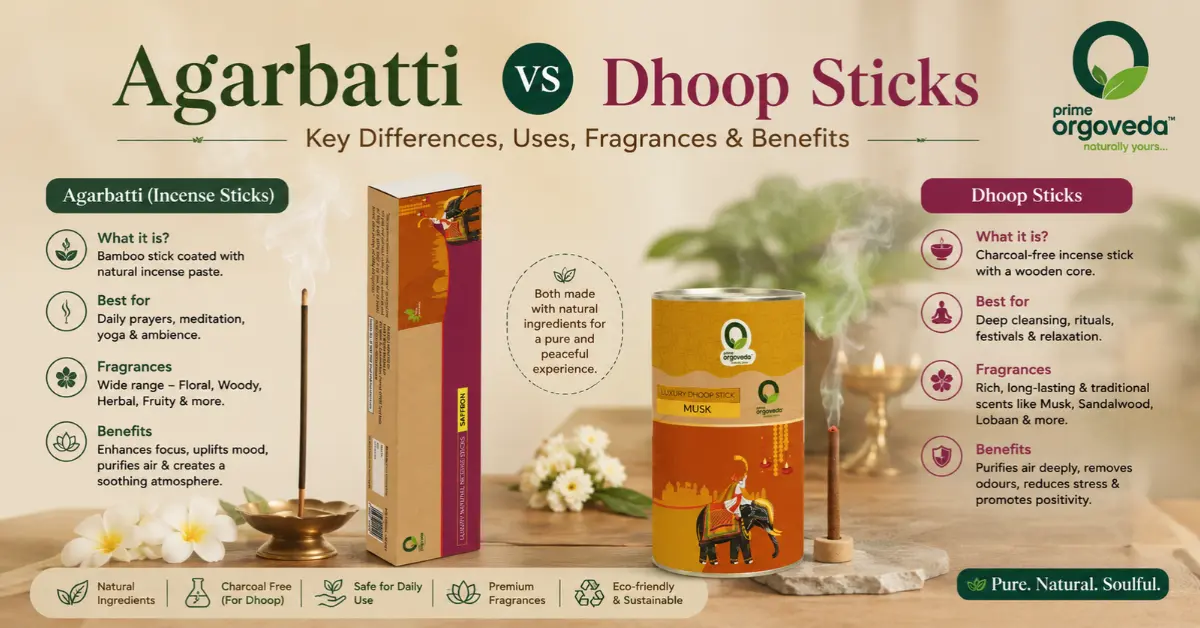
Fragrance has always held a special place in Indian homes, traditions, and spiritual practices. From the peaceful atmosphere of an early morning pooja to the calming surroundings of an evening meditation session, incense plays an important role in creating a welcoming and spiritually uplifting environment. Among the most popular traditional incense products are Agarbatti and Dhoop Sticks. Although both are widely used for prayer, meditation, and home fragrance, they differ in their composition, fragrance intensity, burning characteristics, and traditional applications.
For generations, Agarbatti has been a familiar part of Indian households, appreciated for its pleasant aroma and convenient everyday use. Dhoop Sticks, on the other hand, are valued for their rich, concentrated fragrances and traditional association with devotional rituals. Both offer distinctive aromatic experiences that can complement different moments of daily life.
However, many people still wonder: What is the actual difference between Agarbatti and Dhoop Sticks? Which one is better for daily pooja? Are Dhoop Sticks stronger than Agarbatti? Can both be used for meditation and relaxation?
Understanding these differences can help you choose the right incense according to your fragrance preferences, spiritual practices, and personal requirements. In this guide, we will explore everything you need to know about Agarbatti vs Dhoop Sticks, including their ingredients, fragrance profiles, burning time, traditional significance, uses, and safety considerations.
Whether you prefer the gentle fragrance of traditional incense sticks or the deeper aroma of premium Dhoop, discovering the right option can make your everyday rituals and living spaces more pleasant.
2. What Is Agarbatti? Understanding Traditional Indian Incense Sticks
Agarbatti, commonly known as incense sticks, is one of the most widely used aromatic products in Indian households. It is traditionally made by applying a fragrant mixture of aromatic ingredients to a thin bamboo stick or forming an incense stick without a bamboo core. When lit, Agarbatti slowly burns and releases a pleasant fragrance into the surrounding environment.
The tradition of using incense in India has been associated with religious ceremonies, temple rituals, meditation, and household worship for generations. Today, Agarbatti is also used to create a welcoming atmosphere, refresh indoor spaces with fragrance, and establish a peaceful environment for everyday activities.
How Is Agarbatti Made?
The manufacturing process of Agarbatti generally involves combining aromatic powders, binding materials, combustible ingredients, and fragrance components. The mixture is shaped around a bamboo stick or formed into a stick, depending on the product type. After shaping, the sticks are dried and may be infused or coated with fragrance.
The ingredients and manufacturing techniques vary between manufacturers, fragrance varieties, and product categories.
Common Ingredients Used in Agarbatti
Some commonly used ingredients include:
- Bamboo Sticks: Provide a supporting base for traditional incense sticks.
- Wood Powders: Help form the incense mixture and contribute to its burning characteristics.
- Natural Resins: Ingredients such as aromatic resins may add depth to the fragrance.
- Herbal Ingredients: Selected botanical powders and plant-based materials may be incorporated into incense formulations.
- Binding Materials: Help hold the incense mixture together.
- Fragrance Oils: Provide distinctive aromas such as sandalwood, jasmine, rose, and other traditional fragrances.
Common Uses of Agarbatti
Agarbatti is suitable for several everyday applications, including:
- Daily pooja and household prayers.
- Morning and evening devotional rituals.
- Meditation and yoga sessions.
- Creating a pleasant atmosphere in living rooms.
- Welcoming guests with a gentle fragrance.
- Enhancing the ambience of spiritual and relaxation spaces.
Its familiar format, variety of fragrances, and convenient use make Agarbatti a popular choice for everyday aromatic rituals.
3. What Are Dhoop Sticks? Exploring the Richness of Traditional Indian Dhoop
Dhoop Sticks are traditional Indian incense products known for their distinctive fragrance and devotional significance. Unlike conventional bamboo-core Agarbatti, many Dhoop Sticks are made without a bamboo stick at the centre. They are generally formed from a thick aromatic mixture containing selected powders, herbs, resins, binding materials, and fragrance ingredients.
Dhoop has been an important part of Indian religious and cultural practices for generations. It is traditionally used during pooja, temple ceremonies, festive celebrations, and other devotional occasions. Its rich aroma makes it a popular choice among people who enjoy deeper and more pronounced incense fragrances.
How Are Dhoop Sticks Made?
Dhoop Sticks are typically prepared by blending aromatic ingredients with suitable binding and combustible materials. The resulting mixture is shaped into sticks and dried to achieve the required consistency.
Depending on the formulation, manufacturers may incorporate aromatic resins, wood powders, herbal ingredients, and fragrance compositions to create different scent profiles.
Unlike many conventional Agarbatti varieties, Dhoop Sticks often have a denser composition. However, their thickness, texture, fragrance concentration, and burning characteristics vary depending on the manufacturer and product formulation.
Common Ingredients Used in Dhoop Sticks
Dhoop formulations may contain:
- Wood Powders: Provide the base structure and contribute to the aromatic profile.
- Natural Resins: Guggal and other aromatic resins may be used in traditional formulations.
- Herbal Ingredients: Selected plant-based materials may contribute to the fragrance.
- Binding Materials: Help maintain the shape and consistency of the sticks.
- Aromatic Compounds: Create distinctive fragrance experiences.
- Fragrance Oils: Used in some formulations to develop rich and long-lasting scent profiles.
Common Uses of Dhoop Sticks
Dhoop Sticks are commonly used for:
- Traditional pooja and devotional ceremonies.
- Morning and evening prayers.
- Festival celebrations and religious occasions.
- Temple-inspired aromatic rituals.
- Meditation and spiritual practices.
- Creating a distinctive fragrance in dedicated prayer spaces.
Their traditional appeal and rich aromatic character make Dhoop Sticks an excellent option for people who prefer a more pronounced incense experience.
4. Agarbatti vs Dhoop Sticks: Understanding the Key Differences
Although Agarbatti and Dhoop Sticks serve similar purposes, they have several differences in their physical structure, composition, fragrance characteristics, and everyday applications.
Understanding these differences can help you make a more informed choice when purchasing incense products.
Key Differences Between Agarbatti and Dhoop Sticks
| Comparison | Agarbatti | Dhoop Sticks |
| Physical Structure | Usually made with a thin bamboo core or as a coreless stick | Generally made without a bamboo core |
| Thickness | Usually thinner | Often thicker and denser |
| Composition | Aromatic powders, binding materials, and fragrance ingredients | Aromatic powders, resins, herbs, binding materials, and fragrance ingredients |
| Fragrance | Available in mild, moderate, and strong fragrances | Often associated with rich and concentrated fragrances |
| Smoke | Varies according to formulation | Varies according to formulation and density |
| Burning Time | Depends on stick length, thickness, and composition | Depends on stick size, density, and formulation |
| Everyday Usage | Commonly used for daily pooja and home fragrance | Commonly used for pooja, devotional rituals, and special occasions |
| Fragrance Experience | Offers a wide variety of everyday fragrance options | Often preferred for deeper and more traditional aromatic experiences |
Which One Should You Choose?
The choice between Agarbatti and Dhoop Sticks depends on your personal fragrance preferences and intended use.
- Choose Agarbatti if you prefer convenient incense sticks with a wide selection of fragrance options for everyday use.
- Choose Dhoop Sticks if you enjoy denser incense formulations and richer aromatic experiences during traditional rituals.
- Choose both if you want different fragrance experiences for different occasions and daily activities.
Neither option is universally better. The right choice depends on the fragrance, formulation, burning characteristics, and atmosphere you want to create.
5. Ingredients Used in Agarbatti and Dhoop Sticks: What Goes into Their Making?
The ingredients used in incense products play an important role in determining their fragrance, texture, burning characteristics, and overall aromatic experience. Although Agarbatti and Dhoop Sticks share some common ingredients, their formulations and proportions can differ considerably.
Understanding the materials used in their manufacturing can help consumers make informed purchasing decisions.
Ingredients Commonly Used in Agarbatti
Agarbatti formulations may include several materials that work together to create the final incense stick.
- Bamboo and Other Supporting Materials
Traditional Agarbatti commonly uses a thin bamboo stick as its supporting structure. Some modern varieties are manufactured without a bamboo core.
- Aromatic Wood Powders
Wood-based powders are commonly used in incense formulations. Depending on the ingredients, they may contribute woody, earthy, or warm fragrance characteristics.
- Herbal and Botanical Ingredients
Selected botanical materials may be incorporated to develop distinctive aromatic profiles inspired by traditional Indian fragrances.
- Natural Resins
Aromatic resins are used in certain formulations to provide depth and distinctive fragrance characteristics.
- Fragrance Components
Fragrance oils and aromatic compositions are used to create varieties such as sandalwood, jasmine, rose, lavender, and other popular scents.
Ingredients Commonly Used in Dhoop Sticks
Dhoop Sticks often feature a denser aromatic composition designed to create a distinctive fragrance experience.
- Aromatic Resins
Resins such as Guggal are traditionally associated with Indian incense and devotional practices.
- Wood and Plant-Based Powders
These materials contribute to the structure, texture, and aromatic characteristics of the formulation.
- Herbal Ingredients
Selected herbs and botanical materials may be incorporated according to the manufacturer’s formulation.
- Binding and Combustible Materials
These ingredients help maintain the stick’s shape and support consistent burning.
- Fragrance Ingredients
Different fragrance compositions create distinctive aromas, including sandalwood, amber, oudh, musk, and other traditional fragrance profiles.
Are Natural Ingredients Always Better?
Natural ingredients are valued for their traditional association and distinctive aromatic characteristics. However, the quality of an incense product cannot be determined by the word “natural” alone.
Consumers should consider ingredient transparency, manufacturing quality, fragrance suitability, and product instructions before purchasing. It is also important to remember that natural materials can produce smoke and airborne particles when burned.
Choosing a well-manufactured incense product from a brand that provides clear product information is an important part of making a responsible purchase.
6. Fragrance Differences: Light, Gentle Agarbatti vs Rich, Intense Dhoop Sticks
Fragrance is one of the most noticeable differences people experience when comparing Agarbatti and Dhoop Sticks. Both are available in a wide range of aromatic profiles, but their fragrance intensity depends on the formulation, fragrance ingredients, stick density, and manufacturing process.
Fragrance Characteristics of Agarbatti
Agarbatti is available in different fragrance strengths, ranging from subtle and refreshing to rich and pronounced. Many varieties are designed to provide an enjoyable fragrance for everyday household use.
Popular Agarbatti fragrances include:
- Sandalwood: A warm, woody fragrance traditionally associated with spiritual rituals.
- Jasmine: A floral aroma appreciated for its sweet and familiar fragrance.
- Rose: A classic floral fragrance suitable for creating a welcoming atmosphere.
- Lavender: A soft floral-herbal fragrance often preferred for relaxation spaces.
- Mogra: A traditional Indian floral fragrance with a distinctive aromatic character.
- Javadhu: A traditional fragrance blend known for its distinctive Indian aromatic profile.
Fragrance Characteristics of Dhoop Sticks
Dhoop Sticks are often preferred by people who enjoy deeper, warmer, and more concentrated incense aromas. Their fragrance profiles can create a distinctive atmosphere during devotional rituals and special occasions.
Popular Dhoop fragrances include:
- Guggal: A traditional resin-inspired aromatic profile associated with devotional practices.
- Amber: A warm and rich fragrance with an inviting character.
- Oudh: A deep, woody fragrance appreciated for its luxurious aromatic profile.
- Musk: A warm and distinctive fragrance with a soft, rich character.
- Sandalwood: A traditional woody fragrance suitable for spiritual settings.
- Herbal Blends: Aromatic combinations inspired by traditional botanical ingredients.
How to Select the Right Fragrance?
Your fragrance preference should be the deciding factor when choosing between Agarbatti and Dhoop Sticks.
If you enjoy floral, refreshing, and familiar fragrances, explore jasmine, rose, mogra, or lavender. If you prefer warm, woody, resinous, or deeper aromas, consider sandalwood, Guggal, amber, or oudh.
You can also experiment with different fragrance varieties to discover which ones complement your home, prayer space, and personal preferences.
7. Burning Time and Smoke: How Do Agarbatti and Dhoop Sticks Differ?
Burning time and smoke production are important considerations when selecting incense products. Although Agarbatti and Dhoop Sticks may look similar in their purpose, their burning characteristics can differ depending on their size, thickness, composition, moisture content, and manufacturing quality.
Burning Time of Agarbatti
Agarbatti is generally available in different lengths and thicknesses. Its burning duration depends on the formulation and physical characteristics of the stick.
A thinner incense stick may burn differently from a thicker one. Similarly, products made with different combustible materials may have different burning durations.
For accurate information, consumers should refer to the burning-time details provided by the manufacturer rather than assuming that all Agarbatti products burn for the same duration.
Burning Time of Dhoop Sticks
Dhoop Sticks often have a thicker and denser composition than conventional bamboo-core Agarbatti. However, thickness alone does not determine burning time.
The formulation, stick dimensions, density, and environmental conditions all influence how long a Dhoop Stick takes to burn.
Some Dhoop varieties may burn for a shorter duration, while others may provide a longer burning experience. Always follow the product packaging instructions.
Smoke Production: What Should You Know?
Smoke production varies between different incense products. It is influenced by the ingredients, combustible materials, fragrance components, and burning conditions.
It is not accurate to assume that all Agarbatti produces less smoke or that all Dhoop Sticks produce more smoke. Both categories can have different smoke levels depending on their formulation.
Which Is Better for Indoor Use?
Both Agarbatti and Dhoop Sticks can be used indoors when appropriate precautions are followed.
For indoor use:
- Choose a fragrance intensity that suits the size of your room.
- Keep windows or doors open when appropriate to maintain ventilation.
- Avoid excessive or continuous incense burning.
- Follow the manufacturer’s recommended usage instructions.
- Avoid burning incense near people who are sensitive to smoke or fragrance.
Remember that incense smoke can affect indoor air quality. Good ventilation and moderate use are important regardless of the incense type.
8. Traditional and Spiritual Significance of Agarbatti and Dhoop in Indian Culture
Incense has been closely associated with Indian spiritual traditions, cultural practices, and household rituals for generations. Agarbatti and Dhoop are commonly used during devotional activities because fragrance forms an important part of the traditional worship experience.
In many Indian households, lighting incense is a familiar practice during morning and evening prayers. The fragrance creates a distinctive atmosphere associated with devotion, respect, and spiritual preparation.
The Traditional Significance of Agarbatti
Agarbatti is widely used in everyday pooja and household worship. Lighting an incense stick is often part of preparing the prayer space before beginning a devotional ritual.
Its familiar fragrance and convenient format make it a common choice for:
- Daily household pooja.
- Prayer and devotional activities.
- Festival celebrations.
- Temple visits and religious ceremonies.
- Meditation and spiritual routines.
The Traditional Significance of Dhoop
Dhoop has a long-standing association with traditional Indian worship practices. Aromatic resins and other fragrant materials have historically been used in different forms of devotional offerings.
Dhoop Sticks are commonly incorporated into pooja rituals, festive celebrations, and spiritual ceremonies. Their distinctive aromatic character makes them a preferred option for people who appreciate traditional incense experiences.
How Fragrance Enhances Spiritual Rituals
Fragrance can contribute to the atmosphere of a prayer space by creating a familiar sensory experience. For many people, the aroma of sandalwood, jasmine, Guggal, or other traditional fragrances is closely connected with devotional memories and cultural traditions.
Although individual preferences differ, incorporating incense into a daily spiritual routine can make the experience feel more personal and meaningful.
9. Agarbatti or Dhoop Sticks: Which Is Better for Daily Pooja and Prayer?
Choosing between Agarbatti and Dhoop Sticks for daily pooja depends on your household traditions, fragrance preferences, available space, and personal worship practices.
Both products are widely used in Indian homes and can complement different types of devotional routines.
Why Choose Agarbatti for Daily Pooja?
Agarbatti is a convenient option for everyday prayers because it is easy to light, simple to use, and available in numerous fragrances.
It is particularly suitable for people who prefer:
- A familiar incense format for daily rituals.
- A wide selection of floral and woody fragrances.
- Convenient use during morning and evening pooja.
- Different fragrance options for everyday household worship.
Why Choose Dhoop Sticks for Daily Pooja?
Dhoop Sticks are a traditional choice for people who enjoy richer and more pronounced aromatic experiences.
They may be suitable for:
- Traditional devotional rituals.
- Dedicated prayer spaces.
- Special pooja ceremonies.
- Festival celebrations.
- People who prefer denser incense formulations.
Can You Use Both Agarbatti and Dhoop Sticks?
Yes. You can use both products as part of your household fragrance and devotional routine.
For example, you may prefer Agarbatti for everyday morning prayers and choose Dhoop Sticks for special pooja occasions. Alternatively, you can select either product based on the fragrance you enjoy.
There is no universal rule that requires one product to be used instead of the other. Your personal preferences and religious traditions can guide your choice.
10. Which Is Better for Meditation, Yoga, Relaxation, and Creating a Peaceful Atmosphere?
Fragrance can play an important role in creating a pleasant environment for meditation, yoga, and relaxation. A familiar aroma may help establish a consistent atmosphere that supports your personal routine.
Both Agarbatti and Dhoop Sticks can be used in these settings, provided the fragrance and smoke levels are comfortable for the people present.
Agarbatti for Meditation and Yoga
Agarbatti offers a wide selection of fragrances that can complement quiet indoor activities.
Popular options include:
- Sandalwood: A traditional woody fragrance often associated with meditation and spiritual practices.
- Lavender: A soft floral-herbal aroma commonly selected for relaxation spaces.
- Jasmine: A pleasant floral fragrance suitable for creating a welcoming atmosphere.
- Rose: A familiar floral aroma that adds a gentle fragrance to indoor surroundings.
Dhoop Sticks for Meditation and Spiritual Practices
Dhoop Sticks are another option for people who enjoy deeper aromatic profiles.
Fragrances such as Guggal, sandalwood, amber, and oudh may be preferred for creating a traditional and distinctive atmosphere.
However, fragrance intensity is subjective. A strong fragrance may be enjoyable to one person but uncomfortable for another.
Tips for Using Incense During Meditation and Yoga
- Choose a fragrance that you personally enjoy.
- Use a small amount of incense rather than burning multiple sticks simultaneously.
- Maintain sufficient ventilation in the room.
- Place the incense away from yoga mats, curtains, clothing, and other flammable materials.
- Avoid incense if smoke or fragrance causes discomfort.
- Never leave burning incense unattended.
The purpose of using incense during meditation or yoga should be to complement the environment, not overwhelm it with fragrance or smoke.
11. How to Choose the Right Agarbatti or Dhoop Sticks for Different Occasions
Selecting the right incense product becomes easier when you consider where, when, and how you intend to use it.
Different occasions may call for different fragrance profiles and incense formats.
1. For Daily Household Pooja
Agarbatti and Dhoop Sticks are both suitable options for daily pooja. Sandalwood, jasmine, and other traditional fragrances are popular choices for household worship.
2. For Festivals and Special Celebrations
Festivals such as Diwali, Dussehra, Navratri, and other religious occasions are often associated with traditional incense fragrances.
You can choose sandalwood, Guggal, amber, oudh, or floral fragrances according to your preferences and family traditions.
3. For Meditation and Yoga
Consider fragrances such as sandalwood, lavender, and jasmine if you enjoy gentle aromatic surroundings. Always select a fragrance intensity that feels comfortable.
4. For Living Rooms and Common Areas
Floral and woody Agarbatti fragrances can add a pleasant aromatic touch to your living space.
Choose products according to the room size, ventilation, and fragrance strength.
5. For Traditional Spiritual Rituals
Dhoop Sticks featuring Guggal, sandalwood, and other traditional fragrance profiles can complement devotional routines.
6. For Special Fragrance Experiences
If you enjoy exploring different aromas, try premium fragrance varieties such as Arabian oudh, amberwood, musk, and other distinctive blends.
A Simple Selection Guide
| Occasion | Suggested Choice | Popular Fragrances |
| Daily Pooja | Agarbatti or Dhoop | Sandalwood, Jasmine |
| Festival Celebrations | Agarbatti or Dhoop | Guggal, Amber, Oudh |
| Meditation | Agarbatti or Dhoop | Sandalwood, Lavender |
| Yoga | Agarbatti or Dhoop | Jasmine, Sandalwood |
| Living Room | Agarbatti | Rose, Mogra, Floral |
| Traditional Rituals | Dhoop Sticks | Guggal, Sandalwood |
These are suggestions rather than strict rules. You can choose any suitable fragrance based on your preferences and traditions.
12. Popular Agarbatti and Dhoop Fragrances: Sandalwood, Jasmine, Guggal, Oudh, and More
One of the biggest attractions of Agarbatti and Dhoop Sticks is the wide variety of fragrances available. From familiar Indian floral aromas to rich woody and resinous compositions, every fragrance offers a different aromatic experience.
Here are some popular fragrance varieties worth exploring.
1. Sandalwood Agarbatti and Dhoop
Sandalwood is one of the most recognised traditional Indian fragrance profiles. Its warm, woody, and distinctive aroma makes it a popular choice for pooja, meditation, and everyday fragrance routines.
2. Jasmine Agarbatti
Jasmine is appreciated for its sweet and floral fragrance. It is commonly selected by people who enjoy traditional floral aromas in their homes and prayer spaces.
3. Guggal Dhoop Sticks
Guggal is traditionally associated with Indian incense and devotional practices. Its distinctive resin-inspired aromatic profile makes it a popular choice for traditional pooja and spiritual rituals.
4. Arabian Oudh Incense
Arabian Oudh is known for its deep, woody, and luxurious fragrance character. It is an attractive option for people who enjoy rich and distinctive aromatic compositions.
5. Amber Incense
Amber fragrances are appreciated for their warm, rich, and inviting character. They can complement traditional rituals as well as everyday home fragrance preferences.
6. Rose Agarbatti
Rose is a classic floral fragrance with a familiar and pleasant aromatic character. It is a popular option for people who prefer floral incense.
7. Mogra Agarbatti
Mogra is a traditional Indian floral fragrance known for its distinctive sweet aroma. It is often chosen for household pooja and everyday aromatic use.
8. Musk Incense
Musk offers a warm and distinctive fragrance profile. Depending on its formulation, it can add a soft, rich, and sophisticated character to an incense collection.
9. Javadhu Agarbatti
Javadhu is a traditional Indian fragrance blend valued for its distinctive aromatic character. It is a suitable choice for people who appreciate classic Indian fragrance traditions.
10. Amberwood Incense
Amberwood combines warm amber-inspired and woody fragrance characteristics. It is an appealing option for people who prefer rich and elegant home fragrance experiences.
Exploring different fragrance varieties allows you to discover the aromas that best suit your lifestyle, household rituals, and personal preferences.
13. How to Use Agarbatti and Dhoop Sticks Safely at Home
Agarbatti and Dhoop Sticks can enhance your everyday fragrance experience when used correctly. However, since both products involve burning materials and producing smoke, following basic safety precautions is essential.
Whether you use incense for daily pooja, meditation, or home fragrance, responsible usage helps reduce potential fire hazards and unnecessary smoke exposure.
Important Safety Tips
- Use a Proper Incense Holder
Always place Agarbatti or Dhoop Sticks in a suitable, heat-resistant incense holder. Ensure that the holder is stable and can safely collect falling ash.
- Maintain Proper Ventilation
Use incense in a well-ventilated area. Open windows or doors when appropriate to allow fresh air circulation and prevent smoke accumulation.
- Keep Away from Flammable Materials
Never place burning incense near curtains, paper, clothing, furniture, bedding, or other combustible materials.
- Keep Away from Children and Pets
Place burning incense in a location inaccessible to children and pets. Never leave it unattended.
- Avoid Excessive Burning
Burn only the amount of incense necessary for your intended use. Avoid burning multiple sticks simultaneously in small or poorly ventilated rooms.
- Follow Product Instructions
Different incense products have different burning characteristics. Always follow the manufacturer’s directions regarding lighting, placement, and usage.
- Extinguish Properly
Ensure that the incense is completely extinguished after use. Check that no glowing embers remain before disposing of the ash.
- Consider Smoke Sensitivity
People with asthma, respiratory sensitivities, allergies, or fragrance sensitivities may experience discomfort from incense smoke. Avoid burning incense around anyone who is affected.
Can You Burn Agarbatti and Dhoop Sticks Every Day?
Many households incorporate incense into their daily routines. However, regular exposure to incense smoke may affect indoor air quality.
For a more comfortable indoor environment, use incense moderately, maintain ventilation, and avoid continuous burning.
Responsible usage allows you to enjoy traditional fragrances while being mindful of your indoor surroundings.
14. Why Choose Orgoveda for Premium Agarbatti and Traditional Dhoop Sticks?
When selecting incense products, fragrance quality, product variety, manufacturing standards, and brand reliability are important considerations. Choosing the right brand can make your everyday fragrance and devotional experiences more enjoyable.
Orgoveda is a nature-inspired luxury wellness brand that brings together India’s rich aromatic traditions, spiritual heritage, and traditional fragrance craftsmanship with the needs of modern mindful living.
Inspired by the timeless connection between fragrance, spirituality, and everyday well-being, Orgoveda offers a thoughtfully developed collection of aromatic products designed for pooja, meditation, relaxation, and home fragrance.
Why Explore Orgoveda?
- Inspired by Traditional Indian Fragrances
Orgoveda celebrates India’s aromatic heritage through fragrance varieties inspired by traditional ingredients, cultural practices, and familiar Indian aromas.
- Wide Range of Fragrance Collections
From traditional sandalwood and jasmine to distinctive Guggal, amberwood, and oudh fragrances, Orgoveda offers different aromatic experiences to suit individual preferences.
- Products for Different Spiritual Rituals
Whether you are preparing for morning pooja, evening prayers, meditation, or festive celebrations, Orgoveda offers different incense formats for your aromatic routines.
- Variety of Incense Products
Explore different categories, including:
- Premium Agarbatti
- Traditional Dhoop Sticks
- Dhoop Cones
- Dhoop Cups
- Sambrani
- Computer Sambrani
- Fragrance for Modern Living
Orgoveda brings traditional fragrance experiences into contemporary homes, offering aromatic choices for prayer spaces, living areas, meditation corners, and everyday rituals.
- A Blend of Tradition and Modern Elegance
The brand combines India’s spiritual and aromatic heritage with a refined approach to modern wellness and lifestyle fragrance.
The Orgoveda Promise
- Premium fragrance experiences inspired by traditional Indian heritage.
- Thoughtfully presented aromatic collections.
- Elegant, soothing, and eco-conscious product offerings.
- Creations designed for refined rituals and mindful living.
With its diverse fragrance collections and traditional inspiration, Orgoveda aims to make everyday aromatic experiences more meaningful.
15. Bring Home the Perfect Fragrance: Explore Orgoveda’s Premium Incense Collection
Agarbatti and Dhoop Sticks are more than everyday fragrance products. They represent a beautiful connection between traditional Indian culture, spiritual practices, and the art of creating welcoming spaces.
Whether you prefer the familiar fragrance of sandalwood Agarbatti, the floral aroma of jasmine, the traditional character of Guggal Dhoop, or the rich fragrance of Arabian Oudh, choosing the right incense can complement your personal rituals and lifestyle.
At Orgoveda, we believe that fragrance is an essential part of creating meaningful everyday moments. Our collection brings together traditional aromatic inspiration and contemporary fragrance preferences to offer choices for different occasions.
Discover the perfect fragrance for your home, pooja room, meditation space, and everyday aromatic rituals.
Explore the Orgoveda Collection Today!
- Website: www.orgoveda.com
- Online Shopping: Available on Amazon and Flipkart.
- WhatsApp Orders: +91 70660 77088
- Email: info@orgoveda.com
Orgoveda – Bringing Traditional Indian Fragrance and Mindful Living Together.
16. Frequently Asked Questions (FAQs) About Agarbatti vs Dhoop Sticks
1. What is the main difference between Agarbatti and Dhoop Sticks?
The main difference is their physical structure and formulation. Traditional Agarbatti generally contains a thin bamboo core covered with an aromatic incense mixture, while Dhoop Sticks are generally thicker and made without a bamboo core. Both are available in different fragrances and formulations.
2. Is Agarbatti better than Dhoop Sticks?
Neither is universally better. Agarbatti is popular for everyday use and its wide fragrance selection, while Dhoop Sticks are often preferred for their denser composition and rich aromatic character. Your choice should depend on your fragrance preferences and intended use.
3. Can I use Agarbatti for daily pooja?
Yes. Agarbatti is commonly used for daily household pooja, morning prayers, evening worship, and other devotional activities. Sandalwood, jasmine, rose, and other traditional fragrances are popular choices.
4. Are Dhoop Sticks suitable for daily pooja?
Yes. Dhoop Sticks are traditionally used during household worship and devotional ceremonies. You can use them for daily pooja by following the product instructions and maintaining proper ventilation.
5. Do Dhoop Sticks produce more smoke than Agarbatti?
Not necessarily. Smoke production depends on the ingredients, formulation, thickness, and burning conditions. Some Dhoop Sticks may produce more smoke than certain Agarbatti varieties, but this is not true of every product.
6. Which burns longer: Agarbatti or Dhoop Sticks?
Burning time depends on the length, thickness, density, and composition of the incense. There is no universal rule that Agarbatti or Dhoop Sticks always burn longer. Check the product packaging for specific burning-time information.
7. Can I use Agarbatti and Dhoop Sticks together?
Yes, you can use both as part of your fragrance or devotional routine. However, burning multiple incense products simultaneously may increase indoor smoke and fragrance concentration. Use them moderately and ensure adequate ventilation.
8. Which fragrance is best for meditation?
Sandalwood, lavender, and jasmine are popular fragrance choices for meditation spaces. The best option depends on your personal preference and sensitivity to fragrance. Choose a comfortable fragrance intensity and avoid incense smoke if it causes discomfort.
9. Which is better for home fragrance: Agarbatti or Dhoop Sticks?
Both can be used for home fragrance. Agarbatti offers a wide selection of floral, woody, and refreshing fragrances, while Dhoop Sticks are often preferred by people who enjoy deeper aromatic profiles. Consider your room size, ventilation, and fragrance preferences.
10. Are Agarbatti and Dhoop Sticks made from natural ingredients?
Some Agarbatti and Dhoop Sticks contain botanical powders, wood powders, and natural resins. However, formulations differ between manufacturers, and some products also contain synthetic fragrance ingredients and other additives. Always check the product’s ingredient information.
11. Can Agarbatti be used during yoga?
Yes. Agarbatti can be used to create a pleasant atmosphere during yoga sessions if the fragrance is comfortable for everyone present. Maintain adequate ventilation and avoid burning incense if anyone experiences respiratory or fragrance-related discomfort.
12. What is the difference between Dhoop Sticks and Dhoop Cones?
Dhoop Sticks are formed into elongated stick shapes, while Dhoop Cones are shaped like small cones. Both are commonly made using aromatic powders, binding materials, and fragrance ingredients. Their burning characteristics depend on their size and formulation.
13. Which Agarbatti fragrance is best for daily use?
Sandalwood, jasmine, rose, mogra, and other traditional fragrances are popular for daily household use. The ideal fragrance depends on your personal preferences and the atmosphere you want to create.
14. Are bamboo-free incense sticks available?
Yes. Bamboo-free incense sticks are available in the market. Many traditional Dhoop Sticks are made without bamboo cores, and some Agarbatti varieties are also manufactured as coreless incense sticks.
15. Where can I buy premium Agarbatti and Dhoop Sticks online?
You can explore Orgoveda’s premium incense collections through its official website, www.orgoveda.com. Orgoveda products are also available on Amazon and Flipkart, offering different fragrance varieties for your home and spiritual rituals.


 Agarbatti
 Computer Loban
 Dhoop Sticks
 Dhoop Cones
 Loban Powder
 Dhoop Cups
 Soap
 Facewash
 Shampoo